Oliver! Seating Guide: Best Seats at the Gielgud Theatre
eftir Sarah Gengenbach
January 27, 2026
Deila

Oliver! Seating Guide: Best Seats at the Gielgud Theatre
eftir Sarah Gengenbach
January 27, 2026
Deila

Oliver! Seating Guide: Best Seats at the Gielgud Theatre
eftir Sarah Gengenbach
January 27, 2026
Deila

Oliver! Seating Guide: Best Seats at the Gielgud Theatre
eftir Sarah Gengenbach
January 27, 2026
Deila

Oliver! Seating Guide: Best Seats at the Gielgud Theatre
Looking for the best view of Matthew Bourne's acclaimed new production of Oliver!? The Gielgud Theatre on Shaftesbury Avenue offers around 990 seats across three levels, and where you sit can significantly affect your experience of this choreography-driven revival.
This guide breaks down every section of the theatre, helping you find the right seats for your budget and priorities. Whether you want to be close enough to see the actors' expressions or prefer an elevated view that captures Bourne's full-stage movement sequences, there's a sweet spot for you.
Understanding the Gielgud Theatre Layout
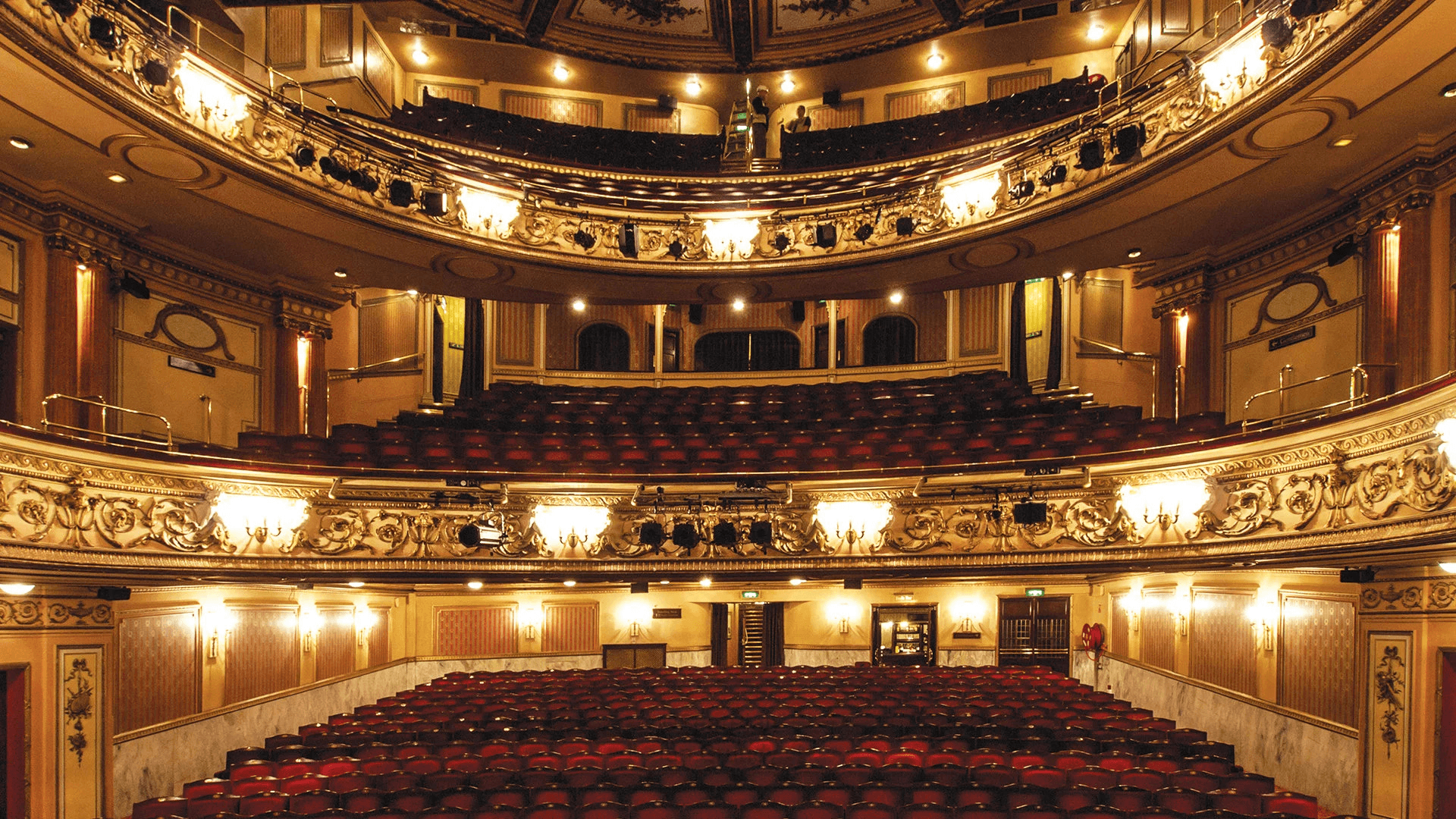
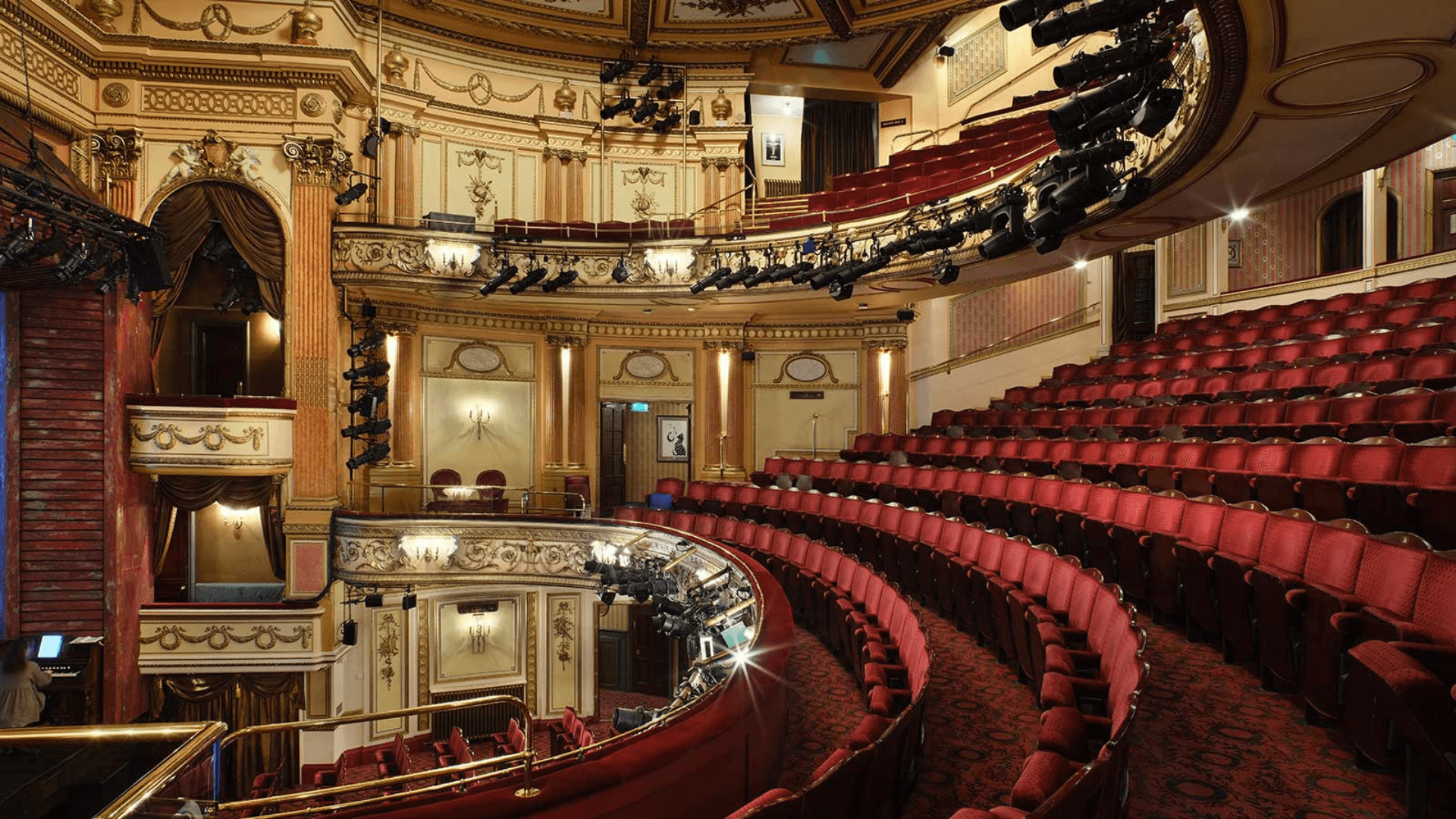
The Gielgud has three seating levels: Stalls (ground floor), Dress Circle (first balcony), and Grand Circle (upper balcony). Built in 1906, it's a traditional West End theatre with an intimate feel despite its nearly 1,000 seat capacity.
The stage sits quite high, which affects views from the front rows. The Dress Circle overhang begins around Row M in the Stalls and can cut off the top of the stage from rear seats. These are the key factors to consider when choosing your seats for Oliver!

The Stalls
The Stalls form one large block of seating on the ground floor, with a standing area at the rear on busy nights.
Best Stalls seats for Oliver!: Rows E to L in the central section offer the ideal combination of proximity and full-stage visibility. You're close enough to appreciate the performers' facial expressions while still seeing the larger choreographic pictures that define Matthew Bourne's staging.
Front rows (A to D): The high stage means these rows require looking up, and you may miss action at the rear of the stage. However, if you want maximum immersion in the workhouse and street scenes, the energy from being this close is hard to beat. Simon Lipkin's Fagin works the stage brilliantly, and seeing his detailed performance up close has real appeal.
Mid-Stalls (E to L centre): This is where most seating guides point you, and for good reason. You get full views of Bourne's choreography, which uses the entire stage width and depth. The big ensemble numbers like Consider Yourself and Who Will Buy read beautifully from here.
Rear Stalls (M onwards): The Dress Circle overhang starts affecting sightlines from Row M, cutting off the top of the stage. Seats in rows N to P should be significantly cheaper, reflecting this limitation. You'll still enjoy the show, but some set pieces and lighting effects may be partially obscured.
Side seats: Rows widen towards the rear, with some seats falling outside the proscenium arch. Ends of rows throughout the Stalls can have angled views, though the good rake (slope) means you won't struggle to see past heads.
The Dress Circle
Many regular theatregoers consider the Dress Circle the best level at the Gielgud, and for Oliver! this makes particular sense. Matthew Bourne's choreography benefits from the slightly elevated perspective that lets you take in full-stage pictures.

Best Dress Circle seats for Oliver!: Rows A to D in the central block offer what many consider the finest views in the house. You're elevated enough to see the full stage but close enough to remain connected to the performances. The safety rail in Row A is generally not an issue for this production.
Row A: Despite being marked as restricted view in some booking systems, Row A centre seats receive excellent reviews for Oliver! specifically. Audience members report the safety rail doesn't obstruct views of the action, and you feel remarkably close to the stage. Seats A14-A16 put you dead centre.
Rows B to D: Prime territory. You get the elevated perspective without feeling distant, excellent sightlines, and generally good legroom. These tend to be premium-priced but represent the best overall experience for appreciating both intimate moments and large-scale numbers.
Rows E onwards: Still very good views, though you begin to feel slightly further from the action. The rake is excellent, so you shouldn't have issues seeing over heads. Prices often drop for rows E-G, making these solid value choices.
Side blocks: The Dress Circle curves around following the balcony shape, so seats at the ends of rows have angled views. Boxes on this level are severely restricted and best avoided unless budget is the primary concern.
The Grand Circle
The uppermost level offers the most affordable seats but comes with trade-offs. The Grand Circle sits high above the stage with a steep rake.
Best Grand Circle seats for Oliver!: Rows A to C in the centre provide surprisingly good views for the price. You're distant from the stage, but sightlines are clear and you can appreciate the full scope of the production design and choreography.
Front rows (A to C): These are often reasonably priced and offer unobstructed views. You'll feel the distance from the performers, but for a visual spectacle like Oliver! with its big ensemble numbers, this perspective works. If budget is a priority, front-centre Grand Circle delivers decent value.
Rear Grand Circle: Rows D onwards feel quite remote from the action. The stage appears small from here, and connecting emotionally with the performances becomes harder. Only choose these if price is the dominant factor.
Accessibility at the Gielgud
The Gielgud Theatre offers step-free access from the Russell Street entrance, with a passenger lift serving all levels. Wheelchair spaces are available in the Stalls and Dress Circle, with companion seats alongside.
The theatre provides infrared hearing enhancement systems, and specific performances offer audio description, captioning, and BSL interpretation. Book accessibility requirements through the theatre's dedicated access line to ensure appropriate seating allocation.
If mobility is a concern, note that the Grand Circle involves steep stairs and may not be suitable. The Stalls and Dress Circle are more easily accessible via the lift.
Seating Tips for Specific Audiences
Families with children: The Dress Circle rows B-D offer good sightlines without requiring children to peer around adults. You're elevated enough that even smaller viewers can see clearly. The Stalls work well too, particularly rows F-K centre where the rake helps.
Theatre newcomers: Mid-Stalls or front Dress Circle provide the most immersive introduction to West End theatre. You're close enough to feel the energy but positioned to appreciate the full production.
Dance and choreography enthusiasts: Matthew Bourne's work is the main draw here. Dress Circle rows A-D let you see the full-stage pictures that define his style. You'll catch formations and movement patterns that disappear when sitting too close.
Budget-conscious bookers: Grand Circle rows A-C centre offer the best value. You sacrifice intimacy but gain clear sightlines at a fraction of premium prices. Midweek performances also tend to have better availability and lower prices throughout the theatre.
Booking Tips for Oliver!
Book midweek for better value and availability. Tuesday to Thursday performances typically offer the best prices, with premium sections often significantly reduced compared to Friday and Saturday.
Consider the matinee if bringing children. Wednesday and Saturday matinees at 2:30pm mean an earlier finish, and Saturday matinees tend to fill with families, creating a buzzy atmosphere that suits Oliver!'s energy.
Check for group discounts. Groups of 10 or more can access reduced rates, particularly for midweek performances. Family groups and school trips benefit significantly from these offers.
Arrive at least 20 minutes early. The Gielgud's foyer areas get congested, and you'll want to be settled before the overture. Food Glorious Food sets the tone immediately, and late arrivals miss one of the show's most iconic openings.
The show runs 2 hours 40 minutes including interval, so factor this into planning, especially for younger audience members.
About This Production
Cameron Mackintosh's new production, directed and choreographed by Matthew Bourne, premiered at Chichester Festival Theatre before transferring to the West End. The cast includes Simon Lipkin as Fagin, Ava Brennan as Nancy, Aaron Sidwell as Bill Sikes, and Aaron MacGregor as the Artful Dodger.
This isn't a museum-piece revival. Bourne has reimagined the staging with his signature movement vocabulary, making seat selection that accounts for choreography particularly worthwhile. The production runs until October 2026.
Book Your Oliver! Tickets
Ready to see this acclaimed production? Browse Oliver! tickets on tickadoo and join our free tickadoo+ membership to earn rewards on every booking.
Oliver! Seating Guide: Best Seats at the Gielgud Theatre
Looking for the best view of Matthew Bourne's acclaimed new production of Oliver!? The Gielgud Theatre on Shaftesbury Avenue offers around 990 seats across three levels, and where you sit can significantly affect your experience of this choreography-driven revival.
This guide breaks down every section of the theatre, helping you find the right seats for your budget and priorities. Whether you want to be close enough to see the actors' expressions or prefer an elevated view that captures Bourne's full-stage movement sequences, there's a sweet spot for you.
Understanding the Gielgud Theatre Layout
The Gielgud has three seating levels: Stalls (ground floor), Dress Circle (first balcony), and Grand Circle (upper balcony). Built in 1906, it's a traditional West End theatre with an intimate feel despite its nearly 1,000 seat capacity.
The stage sits quite high, which affects views from the front rows. The Dress Circle overhang begins around Row M in the Stalls and can cut off the top of the stage from rear seats. These are the key factors to consider when choosing your seats for Oliver!

The Stalls
The Stalls form one large block of seating on the ground floor, with a standing area at the rear on busy nights.
Best Stalls seats for Oliver!: Rows E to L in the central section offer the ideal combination of proximity and full-stage visibility. You're close enough to appreciate the performers' facial expressions while still seeing the larger choreographic pictures that define Matthew Bourne's staging.
Front rows (A to D): The high stage means these rows require looking up, and you may miss action at the rear of the stage. However, if you want maximum immersion in the workhouse and street scenes, the energy from being this close is hard to beat. Simon Lipkin's Fagin works the stage brilliantly, and seeing his detailed performance up close has real appeal.
Mid-Stalls (E to L centre): This is where most seating guides point you, and for good reason. You get full views of Bourne's choreography, which uses the entire stage width and depth. The big ensemble numbers like Consider Yourself and Who Will Buy read beautifully from here.
Rear Stalls (M onwards): The Dress Circle overhang starts affecting sightlines from Row M, cutting off the top of the stage. Seats in rows N to P should be significantly cheaper, reflecting this limitation. You'll still enjoy the show, but some set pieces and lighting effects may be partially obscured.
Side seats: Rows widen towards the rear, with some seats falling outside the proscenium arch. Ends of rows throughout the Stalls can have angled views, though the good rake (slope) means you won't struggle to see past heads.
The Dress Circle
Many regular theatregoers consider the Dress Circle the best level at the Gielgud, and for Oliver! this makes particular sense. Matthew Bourne's choreography benefits from the slightly elevated perspective that lets you take in full-stage pictures.

Best Dress Circle seats for Oliver!: Rows A to D in the central block offer what many consider the finest views in the house. You're elevated enough to see the full stage but close enough to remain connected to the performances. The safety rail in Row A is generally not an issue for this production.
Row A: Despite being marked as restricted view in some booking systems, Row A centre seats receive excellent reviews for Oliver! specifically. Audience members report the safety rail doesn't obstruct views of the action, and you feel remarkably close to the stage. Seats A14-A16 put you dead centre.
Rows B to D: Prime territory. You get the elevated perspective without feeling distant, excellent sightlines, and generally good legroom. These tend to be premium-priced but represent the best overall experience for appreciating both intimate moments and large-scale numbers.
Rows E onwards: Still very good views, though you begin to feel slightly further from the action. The rake is excellent, so you shouldn't have issues seeing over heads. Prices often drop for rows E-G, making these solid value choices.
Side blocks: The Dress Circle curves around following the balcony shape, so seats at the ends of rows have angled views. Boxes on this level are severely restricted and best avoided unless budget is the primary concern.
The Grand Circle
The uppermost level offers the most affordable seats but comes with trade-offs. The Grand Circle sits high above the stage with a steep rake.
Best Grand Circle seats for Oliver!: Rows A to C in the centre provide surprisingly good views for the price. You're distant from the stage, but sightlines are clear and you can appreciate the full scope of the production design and choreography.
Front rows (A to C): These are often reasonably priced and offer unobstructed views. You'll feel the distance from the performers, but for a visual spectacle like Oliver! with its big ensemble numbers, this perspective works. If budget is a priority, front-centre Grand Circle delivers decent value.
Rear Grand Circle: Rows D onwards feel quite remote from the action. The stage appears small from here, and connecting emotionally with the performances becomes harder. Only choose these if price is the dominant factor.
Accessibility at the Gielgud
The Gielgud Theatre offers step-free access from the Russell Street entrance, with a passenger lift serving all levels. Wheelchair spaces are available in the Stalls and Dress Circle, with companion seats alongside.
The theatre provides infrared hearing enhancement systems, and specific performances offer audio description, captioning, and BSL interpretation. Book accessibility requirements through the theatre's dedicated access line to ensure appropriate seating allocation.
If mobility is a concern, note that the Grand Circle involves steep stairs and may not be suitable. The Stalls and Dress Circle are more easily accessible via the lift.
Seating Tips for Specific Audiences
Families with children: The Dress Circle rows B-D offer good sightlines without requiring children to peer around adults. You're elevated enough that even smaller viewers can see clearly. The Stalls work well too, particularly rows F-K centre where the rake helps.
Theatre newcomers: Mid-Stalls or front Dress Circle provide the most immersive introduction to West End theatre. You're close enough to feel the energy but positioned to appreciate the full production.
Dance and choreography enthusiasts: Matthew Bourne's work is the main draw here. Dress Circle rows A-D let you see the full-stage pictures that define his style. You'll catch formations and movement patterns that disappear when sitting too close.
Budget-conscious bookers: Grand Circle rows A-C centre offer the best value. You sacrifice intimacy but gain clear sightlines at a fraction of premium prices. Midweek performances also tend to have better availability and lower prices throughout the theatre.
Booking Tips for Oliver!
Book midweek for better value and availability. Tuesday to Thursday performances typically offer the best prices, with premium sections often significantly reduced compared to Friday and Saturday.
Consider the matinee if bringing children. Wednesday and Saturday matinees at 2:30pm mean an earlier finish, and Saturday matinees tend to fill with families, creating a buzzy atmosphere that suits Oliver!'s energy.
Check for group discounts. Groups of 10 or more can access reduced rates, particularly for midweek performances. Family groups and school trips benefit significantly from these offers.
Arrive at least 20 minutes early. The Gielgud's foyer areas get congested, and you'll want to be settled before the overture. Food Glorious Food sets the tone immediately, and late arrivals miss one of the show's most iconic openings.
The show runs 2 hours 40 minutes including interval, so factor this into planning, especially for younger audience members.
About This Production
Cameron Mackintosh's new production, directed and choreographed by Matthew Bourne, premiered at Chichester Festival Theatre before transferring to the West End. The cast includes Simon Lipkin as Fagin, Ava Brennan as Nancy, Aaron Sidwell as Bill Sikes, and Aaron MacGregor as the Artful Dodger.
This isn't a museum-piece revival. Bourne has reimagined the staging with his signature movement vocabulary, making seat selection that accounts for choreography particularly worthwhile. The production runs until October 2026.
Book Your Oliver! Tickets
Ready to see this acclaimed production? Browse Oliver! tickets on tickadoo and join our free tickadoo+ membership to earn rewards on every booking.
Oliver! Seating Guide: Best Seats at the Gielgud Theatre
Looking for the best view of Matthew Bourne's acclaimed new production of Oliver!? The Gielgud Theatre on Shaftesbury Avenue offers around 990 seats across three levels, and where you sit can significantly affect your experience of this choreography-driven revival.
This guide breaks down every section of the theatre, helping you find the right seats for your budget and priorities. Whether you want to be close enough to see the actors' expressions or prefer an elevated view that captures Bourne's full-stage movement sequences, there's a sweet spot for you.
Understanding the Gielgud Theatre Layout
The Gielgud has three seating levels: Stalls (ground floor), Dress Circle (first balcony), and Grand Circle (upper balcony). Built in 1906, it's a traditional West End theatre with an intimate feel despite its nearly 1,000 seat capacity.
The stage sits quite high, which affects views from the front rows. The Dress Circle overhang begins around Row M in the Stalls and can cut off the top of the stage from rear seats. These are the key factors to consider when choosing your seats for Oliver!

The Stalls
The Stalls form one large block of seating on the ground floor, with a standing area at the rear on busy nights.
Best Stalls seats for Oliver!: Rows E to L in the central section offer the ideal combination of proximity and full-stage visibility. You're close enough to appreciate the performers' facial expressions while still seeing the larger choreographic pictures that define Matthew Bourne's staging.
Front rows (A to D): The high stage means these rows require looking up, and you may miss action at the rear of the stage. However, if you want maximum immersion in the workhouse and street scenes, the energy from being this close is hard to beat. Simon Lipkin's Fagin works the stage brilliantly, and seeing his detailed performance up close has real appeal.
Mid-Stalls (E to L centre): This is where most seating guides point you, and for good reason. You get full views of Bourne's choreography, which uses the entire stage width and depth. The big ensemble numbers like Consider Yourself and Who Will Buy read beautifully from here.
Rear Stalls (M onwards): The Dress Circle overhang starts affecting sightlines from Row M, cutting off the top of the stage. Seats in rows N to P should be significantly cheaper, reflecting this limitation. You'll still enjoy the show, but some set pieces and lighting effects may be partially obscured.
Side seats: Rows widen towards the rear, with some seats falling outside the proscenium arch. Ends of rows throughout the Stalls can have angled views, though the good rake (slope) means you won't struggle to see past heads.
The Dress Circle
Many regular theatregoers consider the Dress Circle the best level at the Gielgud, and for Oliver! this makes particular sense. Matthew Bourne's choreography benefits from the slightly elevated perspective that lets you take in full-stage pictures.

Best Dress Circle seats for Oliver!: Rows A to D in the central block offer what many consider the finest views in the house. You're elevated enough to see the full stage but close enough to remain connected to the performances. The safety rail in Row A is generally not an issue for this production.
Row A: Despite being marked as restricted view in some booking systems, Row A centre seats receive excellent reviews for Oliver! specifically. Audience members report the safety rail doesn't obstruct views of the action, and you feel remarkably close to the stage. Seats A14-A16 put you dead centre.
Rows B to D: Prime territory. You get the elevated perspective without feeling distant, excellent sightlines, and generally good legroom. These tend to be premium-priced but represent the best overall experience for appreciating both intimate moments and large-scale numbers.
Rows E onwards: Still very good views, though you begin to feel slightly further from the action. The rake is excellent, so you shouldn't have issues seeing over heads. Prices often drop for rows E-G, making these solid value choices.
Side blocks: The Dress Circle curves around following the balcony shape, so seats at the ends of rows have angled views. Boxes on this level are severely restricted and best avoided unless budget is the primary concern.
The Grand Circle
The uppermost level offers the most affordable seats but comes with trade-offs. The Grand Circle sits high above the stage with a steep rake.
Best Grand Circle seats for Oliver!: Rows A to C in the centre provide surprisingly good views for the price. You're distant from the stage, but sightlines are clear and you can appreciate the full scope of the production design and choreography.
Front rows (A to C): These are often reasonably priced and offer unobstructed views. You'll feel the distance from the performers, but for a visual spectacle like Oliver! with its big ensemble numbers, this perspective works. If budget is a priority, front-centre Grand Circle delivers decent value.
Rear Grand Circle: Rows D onwards feel quite remote from the action. The stage appears small from here, and connecting emotionally with the performances becomes harder. Only choose these if price is the dominant factor.
Accessibility at the Gielgud
The Gielgud Theatre offers step-free access from the Russell Street entrance, with a passenger lift serving all levels. Wheelchair spaces are available in the Stalls and Dress Circle, with companion seats alongside.
The theatre provides infrared hearing enhancement systems, and specific performances offer audio description, captioning, and BSL interpretation. Book accessibility requirements through the theatre's dedicated access line to ensure appropriate seating allocation.
If mobility is a concern, note that the Grand Circle involves steep stairs and may not be suitable. The Stalls and Dress Circle are more easily accessible via the lift.
Seating Tips for Specific Audiences
Families with children: The Dress Circle rows B-D offer good sightlines without requiring children to peer around adults. You're elevated enough that even smaller viewers can see clearly. The Stalls work well too, particularly rows F-K centre where the rake helps.
Theatre newcomers: Mid-Stalls or front Dress Circle provide the most immersive introduction to West End theatre. You're close enough to feel the energy but positioned to appreciate the full production.
Dance and choreography enthusiasts: Matthew Bourne's work is the main draw here. Dress Circle rows A-D let you see the full-stage pictures that define his style. You'll catch formations and movement patterns that disappear when sitting too close.
Budget-conscious bookers: Grand Circle rows A-C centre offer the best value. You sacrifice intimacy but gain clear sightlines at a fraction of premium prices. Midweek performances also tend to have better availability and lower prices throughout the theatre.
Booking Tips for Oliver!
Book midweek for better value and availability. Tuesday to Thursday performances typically offer the best prices, with premium sections often significantly reduced compared to Friday and Saturday.
Consider the matinee if bringing children. Wednesday and Saturday matinees at 2:30pm mean an earlier finish, and Saturday matinees tend to fill with families, creating a buzzy atmosphere that suits Oliver!'s energy.
Check for group discounts. Groups of 10 or more can access reduced rates, particularly for midweek performances. Family groups and school trips benefit significantly from these offers.
Arrive at least 20 minutes early. The Gielgud's foyer areas get congested, and you'll want to be settled before the overture. Food Glorious Food sets the tone immediately, and late arrivals miss one of the show's most iconic openings.
The show runs 2 hours 40 minutes including interval, so factor this into planning, especially for younger audience members.
About This Production
Cameron Mackintosh's new production, directed and choreographed by Matthew Bourne, premiered at Chichester Festival Theatre before transferring to the West End. The cast includes Simon Lipkin as Fagin, Ava Brennan as Nancy, Aaron Sidwell as Bill Sikes, and Aaron MacGregor as the Artful Dodger.
This isn't a museum-piece revival. Bourne has reimagined the staging with his signature movement vocabulary, making seat selection that accounts for choreography particularly worthwhile. The production runs until October 2026.
Book Your Oliver! Tickets
Ready to see this acclaimed production? Browse Oliver! tickets on tickadoo and join our free tickadoo+ membership to earn rewards on every booking.
Deildu þessari færslu: