ਬ੍ਰੱਸਲਜ਼ ਵਿੱਚ ਕੀ ਚਲ ਰਿਹਾ ਹੈ Brussels

ਕੀ ਵਰਤਮਾਨ ਵਿੱਚ ਬਰੱਸਲਸ

ਕੀ ਚੱਲ ਰਿਹਾ ਹੈ
ਬਰੱਸੇਲਜ਼

Brussels pairs storybook squares with cutting edge politics and indulgent food. Start with Grand Place, Belgian Beer World and a Brussels chocolate tasting tour, then use this guide to choose Brussels city tours, museum tickets and flexible mobile bookings that match your style.

From the glowing guildhalls of Grand Place to the EU Quarter, and from art museums to culinary tours, combine hop on hop off bus tickets, attraction passes and neighbourhood walks to map out effortless days and future day trips.

ਸਾਰੇ ਬ੍ਰੱਸਲ ਟਿਕਟ


Brussels quick facts: airports, stations and maps

Plan your days with these essential details for Brussels Belgium. Knowing how the city fits together helps you link Grand Place, the European Quarter and canal districts into smooth sightseeing days.

  • State/Region/Country: Capital of Belgium, in the Brussels-Capital Region, part of Western Europe and the Benelux area.

  • Airports: Brussels Airport BRU in Zaventem handles most international flights. Brussels South Charleroi Airport CRL serves many low cost carriers, around 60 km south of the city.

  • Main stations/hubs: Bruxelles-Midi / Brussel-Zuid for Eurostar and Thalys style high speed trains, Bruxelles-Central / Brussel-Centraal near Grand Place, and Bruxelles-Nord / Brussel-Noord for regional trains.

  • Public transport: STIB-MIVB runs Metro lines 1, 2, 5 and 6, tram lines such as 3, 4, 7 and 92, plus an extensive bus network that covers outer districts.

  • Paying fares: Use the contactless Mobib card or bank card tap in system, with daily and monthly fare capping across Metro, trams and buses inside the Brussels-Capital Region.

  • Coordinates: Around 50.8467° N latitude and 4.3525° E longitude, in the heart of north western Europe.

  • Popular neighbourhoods: Historic Centre around Grand Place, Sainte-Catherine, Sablon, Marolles, European Quarter, Saint-Gilles and Ixelles, each with distinct nightlife, dining and architecture.

  • Additional context: No beaches or mountains, but leafy parks and easy rail links to cities like Ghent and Bruges make Brussels a practical urban base.

STIB keeps expanding tram priority corridors, so surface trams often beat taxis at rush hour between the European Quarter, Louise and the canal districts.

Top things to do in Brussels

Start with major Brussels attractions, then layer in neighbourhood walks, food experiences and relaxed time in squares and parks.

  • Explore Grand Place by day and night: Admire the gilded guildhalls and Town Hall, then return after dark when façades light up for atmospheric photos.

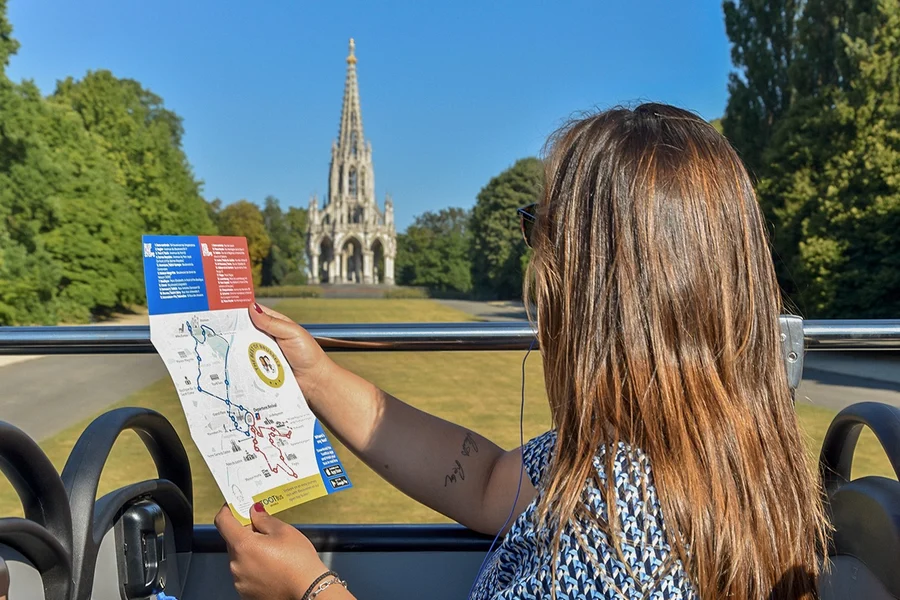
  • Use Brussels hop on hop off bus tour tickets: Join a Brussels sightseeing bus to link Grand Place, Atomium area and European Quarter with panoramic views and flexible stops.

  • Visit Belgian Beer World: Reserve Belgian Beer World tickets in the historic Brussels Stock Exchange building to learn brewing stories and taste classic and modern Belgian beers.

  • Join a Brussels chocolate tasting tour: Take a Brussels chocolate tasting tour with guided visits to artisan chocolatiers around the Galeries Royales Saint-Hubert and Sablon.

  • Book Brussels art museum tickets: Use Brussels art museum tickets for the Royal Museums of Fine Arts or Magritte Museum to discover Belgian masters and surrealism.

  • Walk the city centre on a guided Brussels walking tour: Hear local stories about Manneken-Pis, the comic strip murals and hidden passages with a knowledgeable guide.

  • Join Brussels EU tour tickets for the European Quarter: Explore the European Parliament visitor centre and EU institutions to understand how Brussels works as a political capital.

  • Try a Brussels culinary tour: Combine frites, waffles, beer and Belgian specialties on an evening Brussels food tour through Sainte-Catherine or Saint-Géry.

  • Relax in local squares: Sit at café terraces around Place Sainte-Catherine or Place du Châtelain to watch everyday Brussels life between sightseeing stops.

  • Consider day trips by train: Use frequent SNCB services from Bruxelles-Central to Ghent, Bruges or Antwerp for easy day trips that pair well with a Brussels base.

Tickets and city passes in Brussels

Smart use of tickets and passes in Brussels keeps queues short and budgets predictable, especially for popular museums and Belgian Beer World.

  • Book Brussels combo tickets: Combine a Brussels hop on hop off bus tour with Belgian Beer World tickets or museum entry to save compared with buying separately and to keep all reservations on one mobile voucher.

  • Reserve Belgian Beer World entry in advance: Timed Belgian Beer World tickets help you avoid afternoon lines, especially on weekends and during public holidays in Brussels.

  • Choose Brussels art museum tickets and attraction passes: Prebook Brussels museum passes or individual time slot tickets for Royal Museums of Fine Arts, Magritte Museum and other galleries to secure your preferred day.

  • Use Brussels chocolate tasting and food tour tickets: Guided chocolate and culinary tours often include several tastings, so a single ticket can replace multiple small purchases and offer better value.

  • Pick flexible Brussels EU tour tickets and walking tours: Many walking tours and Brussels EU tour tickets offer free cancellation until 24 hours before, which suits changeable city breaks.

If you plan two or three paid Brussels attractions in one or two days, especially Belgian Beer World, art museums and food tours, Brussels combo tickets or attraction passes usually offer good value and streamline mobile tickets.

Getting around Brussels by Metro, tram and bus

The STIB network in Brussels is compact yet effective, and once you know the Metro lines and key tram routes, moving between neighbourhoods is straightforward.

  • Use Metro lines 1 and 5 east west: Lines 1 and 5 link Bruxelles-Ouest, Bruxelles-Central and the European Quarter, useful for hopping from Grand Place towards Schuman and Parc du Cinquantenaire.

  • Rely on Metro lines 2 and 6 for the inner ring: These loop style lines connect major hubs like Bruxelles-Midi, Rogier and Botanique, a practical way to orbit central Brussels without traffic.

  • Tap with Mobib or contactless: Load a Mobib card or simply tap a contactless bank card at STIB validators. Fares are capped daily, so multiple rides in one day will not exceed a fixed limit.

  • From BRU to central Brussels: Take SNCB trains from Brussels Airport BRU station to Bruxelles-Central or Bruxelles-Midi in about 20 minutes, quicker than most road options during rush hour.

  • From CRL to the city: Use the Brussels City Shuttle bus from Brussels South Charleroi Airport CRL to Bruxelles-Midi, then connect by Metro or tram to your hotel area.

  • Try trams and walking for short hops: Trams 3 and 4 are handy between the centre and northern or southern districts, while much of central Brussels is walkable, especially between Grand Place, Sainte-Catherine and Sablon.

  • Consider bikes and taxis selectively: Shared bikes and taxis work for late evenings or specific journeys, but narrow streets and cobbles mean many visitors prefer trams and Metro for reliability.

Traffic can be slow on inner ring roads at peak times, so plan Brussels city tours, Belgian Beer World visits and EU institution stops either mid morning or later in the afternoon for smoother transfers.

When is the best time to visit Brussels?

Brussels is pleasant from late April to June, with mild temperatures around 12 to 20°C and plenty of terrace time at Grand Place and Sainte-Catherine. July and August are warmer but can be busy and rainy. Autumn from September to October brings cooler air, fewer crowds and colourful parks. December is popular for Christmas markets and lights, so book tickets and hotels early.

How many days do you need in Brussels?

With two days in Brussels you can explore Grand Place, the historic centre, Belgian Beer World, a Brussels chocolate tasting tour and one major art museum. In three to four days add a Brussels EU tour, more neighbourhood walks in Sablon and Ixelles, plus a Brussels culinary tour. With five days, include an easy rail day trip to Ghent or Bruges.

Is Brussels expensive to visit?

Brussels can feel moderately expensive, especially around Grand Place and the European Quarter, but smart planning helps. Reserve Brussels combo tickets for the hop on hop off bus and Belgian Beer World, and look for Brussels museum passes. Eat lunch menus in Sainte-Catherine or Saint-Gilles instead of only dining in tourist squares to stretch your budget without missing key attractions.

What are the must-see attractions in Brussels?

Must see Brussels attractions start with Grand Place, its ornate guildhalls and nearby Manneken-Pis. Book Belgian Beer World tickets in the Brussels Stock Exchange and join a Brussels chocolate tasting tour around Galeries Royales Saint-Hubert. Add the Royal Museums of Fine Arts or Magritte Museum, a Brussels hop on hop off bus tour for city views, and time in the European Quarter around the Parliament.

Do I need to book Belgian Beer World tickets in advance?

Booking Belgian Beer World tickets in advance is strongly recommended, especially on weekends, public holidays and during busy events in Brussels. Timed entry slots can sell out for late afternoon tastings. Advance mobile tickets let you plan a Brussels walking tour or Grand Place visit earlier, then arrive for your beer experience without waiting in long lines at the entrance.

How do I get from BRU to central Brussels?

From Brussels Airport BRU, the quickest option is the SNCB train from the airport station to Bruxelles-Central or Bruxelles-Midi in about 20 minutes. De Lijn and STIB buses serve northern districts and the EU Quarter. Taxis and rideshare take 25 to 40 minutes depending on traffic. Late at night many visitors prefer taxis for direct, door to door travel.

Where should I stay in Brussels?

For first time visitors, the Historic Centre around Grand Place and Bruxelles-Central is ideal for classic Brussels sights and easy Metro access. Sainte-Catherine suits food lovers who want seafood and lively bars. Sablon feels elegant and close to antique shops and museums. European Quarter hotels near Schuman work for business travellers. Saint-Gilles and Ixelles attract younger visitors and longer stays.

What is Brussels known for?

Brussels is known for its UNESCO listed Grand Place, powerful European Union institutions, and culinary indulgences like chocolate, waffles, frites and complex Trappist beers. Visitors come for Belgian Beer World, Brussels chocolate tasting tours, comic strip murals and Art Nouveau architecture in Ixelles and Saint-Gilles. The city also serves as a rail hub for day trips across Belgium and neighbouring countries.


Brussels quick facts: airports, stations and maps

Plan your days with these essential details for Brussels Belgium. Knowing how the city fits together helps you link Grand Place, the European Quarter and canal districts into smooth sightseeing days.

  • State/Region/Country: Capital of Belgium, in the Brussels-Capital Region, part of Western Europe and the Benelux area.

  • Airports: Brussels Airport BRU in Zaventem handles most international flights. Brussels South Charleroi Airport CRL serves many low cost carriers, around 60 km south of the city.

  • Main stations/hubs: Bruxelles-Midi / Brussel-Zuid for Eurostar and Thalys style high speed trains, Bruxelles-Central / Brussel-Centraal near Grand Place, and Bruxelles-Nord / Brussel-Noord for regional trains.

  • Public transport: STIB-MIVB runs Metro lines 1, 2, 5 and 6, tram lines such as 3, 4, 7 and 92, plus an extensive bus network that covers outer districts.

  • Paying fares: Use the contactless Mobib card or bank card tap in system, with daily and monthly fare capping across Metro, trams and buses inside the Brussels-Capital Region.

  • Coordinates: Around 50.8467° N latitude and 4.3525° E longitude, in the heart of north western Europe.

  • Popular neighbourhoods: Historic Centre around Grand Place, Sainte-Catherine, Sablon, Marolles, European Quarter, Saint-Gilles and Ixelles, each with distinct nightlife, dining and architecture.

  • Additional context: No beaches or mountains, but leafy parks and easy rail links to cities like Ghent and Bruges make Brussels a practical urban base.

STIB keeps expanding tram priority corridors, so surface trams often beat taxis at rush hour between the European Quarter, Louise and the canal districts.

Top things to do in Brussels

Start with major Brussels attractions, then layer in neighbourhood walks, food experiences and relaxed time in squares and parks.

  • Explore Grand Place by day and night: Admire the gilded guildhalls and Town Hall, then return after dark when façades light up for atmospheric photos.

  • Use Brussels hop on hop off bus tour tickets: Join a Brussels sightseeing bus to link Grand Place, Atomium area and European Quarter with panoramic views and flexible stops.

  • Visit Belgian Beer World: Reserve Belgian Beer World tickets in the historic Brussels Stock Exchange building to learn brewing stories and taste classic and modern Belgian beers.

  • Join a Brussels chocolate tasting tour: Take a Brussels chocolate tasting tour with guided visits to artisan chocolatiers around the Galeries Royales Saint-Hubert and Sablon.

  • Book Brussels art museum tickets: Use Brussels art museum tickets for the Royal Museums of Fine Arts or Magritte Museum to discover Belgian masters and surrealism.

  • Walk the city centre on a guided Brussels walking tour: Hear local stories about Manneken-Pis, the comic strip murals and hidden passages with a knowledgeable guide.

  • Join Brussels EU tour tickets for the European Quarter: Explore the European Parliament visitor centre and EU institutions to understand how Brussels works as a political capital.

  • Try a Brussels culinary tour: Combine frites, waffles, beer and Belgian specialties on an evening Brussels food tour through Sainte-Catherine or Saint-Géry.

  • Relax in local squares: Sit at café terraces around Place Sainte-Catherine or Place du Châtelain to watch everyday Brussels life between sightseeing stops.

  • Consider day trips by train: Use frequent SNCB services from Bruxelles-Central to Ghent, Bruges or Antwerp for easy day trips that pair well with a Brussels base.

Tickets and city passes in Brussels

Smart use of tickets and passes in Brussels keeps queues short and budgets predictable, especially for popular museums and Belgian Beer World.

  • Book Brussels combo tickets: Combine a Brussels hop on hop off bus tour with Belgian Beer World tickets or museum entry to save compared with buying separately and to keep all reservations on one mobile voucher.

  • Reserve Belgian Beer World entry in advance: Timed Belgian Beer World tickets help you avoid afternoon lines, especially on weekends and during public holidays in Brussels.

  • Choose Brussels art museum tickets and attraction passes: Prebook Brussels museum passes or individual time slot tickets for Royal Museums of Fine Arts, Magritte Museum and other galleries to secure your preferred day.

  • Use Brussels chocolate tasting and food tour tickets: Guided chocolate and culinary tours often include several tastings, so a single ticket can replace multiple small purchases and offer better value.

  • Pick flexible Brussels EU tour tickets and walking tours: Many walking tours and Brussels EU tour tickets offer free cancellation until 24 hours before, which suits changeable city breaks.

If you plan two or three paid Brussels attractions in one or two days, especially Belgian Beer World, art museums and food tours, Brussels combo tickets or attraction passes usually offer good value and streamline mobile tickets.

Getting around Brussels by Metro, tram and bus

The STIB network in Brussels is compact yet effective, and once you know the Metro lines and key tram routes, moving between neighbourhoods is straightforward.

  • Use Metro lines 1 and 5 east west: Lines 1 and 5 link Bruxelles-Ouest, Bruxelles-Central and the European Quarter, useful for hopping from Grand Place towards Schuman and Parc du Cinquantenaire.

  • Rely on Metro lines 2 and 6 for the inner ring: These loop style lines connect major hubs like Bruxelles-Midi, Rogier and Botanique, a practical way to orbit central Brussels without traffic.

  • Tap with Mobib or contactless: Load a Mobib card or simply tap a contactless bank card at STIB validators. Fares are capped daily, so multiple rides in one day will not exceed a fixed limit.

  • From BRU to central Brussels: Take SNCB trains from Brussels Airport BRU station to Bruxelles-Central or Bruxelles-Midi in about 20 minutes, quicker than most road options during rush hour.

  • From CRL to the city: Use the Brussels City Shuttle bus from Brussels South Charleroi Airport CRL to Bruxelles-Midi, then connect by Metro or tram to your hotel area.

  • Try trams and walking for short hops: Trams 3 and 4 are handy between the centre and northern or southern districts, while much of central Brussels is walkable, especially between Grand Place, Sainte-Catherine and Sablon.

  • Consider bikes and taxis selectively: Shared bikes and taxis work for late evenings or specific journeys, but narrow streets and cobbles mean many visitors prefer trams and Metro for reliability.

Traffic can be slow on inner ring roads at peak times, so plan Brussels city tours, Belgian Beer World visits and EU institution stops either mid morning or later in the afternoon for smoother transfers.

When is the best time to visit Brussels?

Brussels is pleasant from late April to June, with mild temperatures around 12 to 20°C and plenty of terrace time at Grand Place and Sainte-Catherine. July and August are warmer but can be busy and rainy. Autumn from September to October brings cooler air, fewer crowds and colourful parks. December is popular for Christmas markets and lights, so book tickets and hotels early.

How many days do you need in Brussels?

With two days in Brussels you can explore Grand Place, the historic centre, Belgian Beer World, a Brussels chocolate tasting tour and one major art museum. In three to four days add a Brussels EU tour, more neighbourhood walks in Sablon and Ixelles, plus a Brussels culinary tour. With five days, include an easy rail day trip to Ghent or Bruges.

Is Brussels expensive to visit?

Brussels can feel moderately expensive, especially around Grand Place and the European Quarter, but smart planning helps. Reserve Brussels combo tickets for the hop on hop off bus and Belgian Beer World, and look for Brussels museum passes. Eat lunch menus in Sainte-Catherine or Saint-Gilles instead of only dining in tourist squares to stretch your budget without missing key attractions.

What are the must-see attractions in Brussels?

Must see Brussels attractions start with Grand Place, its ornate guildhalls and nearby Manneken-Pis. Book Belgian Beer World tickets in the Brussels Stock Exchange and join a Brussels chocolate tasting tour around Galeries Royales Saint-Hubert. Add the Royal Museums of Fine Arts or Magritte Museum, a Brussels hop on hop off bus tour for city views, and time in the European Quarter around the Parliament.

Do I need to book Belgian Beer World tickets in advance?

Booking Belgian Beer World tickets in advance is strongly recommended, especially on weekends, public holidays and during busy events in Brussels. Timed entry slots can sell out for late afternoon tastings. Advance mobile tickets let you plan a Brussels walking tour or Grand Place visit earlier, then arrive for your beer experience without waiting in long lines at the entrance.

How do I get from BRU to central Brussels?

From Brussels Airport BRU, the quickest option is the SNCB train from the airport station to Bruxelles-Central or Bruxelles-Midi in about 20 minutes. De Lijn and STIB buses serve northern districts and the EU Quarter. Taxis and rideshare take 25 to 40 minutes depending on traffic. Late at night many visitors prefer taxis for direct, door to door travel.

Where should I stay in Brussels?

For first time visitors, the Historic Centre around Grand Place and Bruxelles-Central is ideal for classic Brussels sights and easy Metro access. Sainte-Catherine suits food lovers who want seafood and lively bars. Sablon feels elegant and close to antique shops and museums. European Quarter hotels near Schuman work for business travellers. Saint-Gilles and Ixelles attract younger visitors and longer stays.

What is Brussels known for?

Brussels is known for its UNESCO listed Grand Place, powerful European Union institutions, and culinary indulgences like chocolate, waffles, frites and complex Trappist beers. Visitors come for Belgian Beer World, Brussels chocolate tasting tours, comic strip murals and Art Nouveau architecture in Ixelles and Saint-Gilles. The city also serves as a rail hub for day trips across Belgium and neighbouring countries.


Brussels quick facts: airports, stations and maps

Plan your days with these essential details for Brussels Belgium. Knowing how the city fits together helps you link Grand Place, the European Quarter and canal districts into smooth sightseeing days.

  • State/Region/Country: Capital of Belgium, in the Brussels-Capital Region, part of Western Europe and the Benelux area.

  • Airports: Brussels Airport BRU in Zaventem handles most international flights. Brussels South Charleroi Airport CRL serves many low cost carriers, around 60 km south of the city.

  • Main stations/hubs: Bruxelles-Midi / Brussel-Zuid for Eurostar and Thalys style high speed trains, Bruxelles-Central / Brussel-Centraal near Grand Place, and Bruxelles-Nord / Brussel-Noord for regional trains.

  • Public transport: STIB-MIVB runs Metro lines 1, 2, 5 and 6, tram lines such as 3, 4, 7 and 92, plus an extensive bus network that covers outer districts.

  • Paying fares: Use the contactless Mobib card or bank card tap in system, with daily and monthly fare capping across Metro, trams and buses inside the Brussels-Capital Region.

  • Coordinates: Around 50.8467° N latitude and 4.3525° E longitude, in the heart of north western Europe.

  • Popular neighbourhoods: Historic Centre around Grand Place, Sainte-Catherine, Sablon, Marolles, European Quarter, Saint-Gilles and Ixelles, each with distinct nightlife, dining and architecture.

  • Additional context: No beaches or mountains, but leafy parks and easy rail links to cities like Ghent and Bruges make Brussels a practical urban base.

STIB keeps expanding tram priority corridors, so surface trams often beat taxis at rush hour between the European Quarter, Louise and the canal districts.

Top things to do in Brussels

Start with major Brussels attractions, then layer in neighbourhood walks, food experiences and relaxed time in squares and parks.

  • Explore Grand Place by day and night: Admire the gilded guildhalls and Town Hall, then return after dark when façades light up for atmospheric photos.

  • Use Brussels hop on hop off bus tour tickets: Join a Brussels sightseeing bus to link Grand Place, Atomium area and European Quarter with panoramic views and flexible stops.

  • Visit Belgian Beer World: Reserve Belgian Beer World tickets in the historic Brussels Stock Exchange building to learn brewing stories and taste classic and modern Belgian beers.

  • Join a Brussels chocolate tasting tour: Take a Brussels chocolate tasting tour with guided visits to artisan chocolatiers around the Galeries Royales Saint-Hubert and Sablon.

  • Book Brussels art museum tickets: Use Brussels art museum tickets for the Royal Museums of Fine Arts or Magritte Museum to discover Belgian masters and surrealism.

  • Walk the city centre on a guided Brussels walking tour: Hear local stories about Manneken-Pis, the comic strip murals and hidden passages with a knowledgeable guide.

  • Join Brussels EU tour tickets for the European Quarter: Explore the European Parliament visitor centre and EU institutions to understand how Brussels works as a political capital.

  • Try a Brussels culinary tour: Combine frites, waffles, beer and Belgian specialties on an evening Brussels food tour through Sainte-Catherine or Saint-Géry.

  • Relax in local squares: Sit at café terraces around Place Sainte-Catherine or Place du Châtelain to watch everyday Brussels life between sightseeing stops.

  • Consider day trips by train: Use frequent SNCB services from Bruxelles-Central to Ghent, Bruges or Antwerp for easy day trips that pair well with a Brussels base.

Tickets and city passes in Brussels

Smart use of tickets and passes in Brussels keeps queues short and budgets predictable, especially for popular museums and Belgian Beer World.

  • Book Brussels combo tickets: Combine a Brussels hop on hop off bus tour with Belgian Beer World tickets or museum entry to save compared with buying separately and to keep all reservations on one mobile voucher.

  • Reserve Belgian Beer World entry in advance: Timed Belgian Beer World tickets help you avoid afternoon lines, especially on weekends and during public holidays in Brussels.

  • Choose Brussels art museum tickets and attraction passes: Prebook Brussels museum passes or individual time slot tickets for Royal Museums of Fine Arts, Magritte Museum and other galleries to secure your preferred day.

  • Use Brussels chocolate tasting and food tour tickets: Guided chocolate and culinary tours often include several tastings, so a single ticket can replace multiple small purchases and offer better value.

  • Pick flexible Brussels EU tour tickets and walking tours: Many walking tours and Brussels EU tour tickets offer free cancellation until 24 hours before, which suits changeable city breaks.

If you plan two or three paid Brussels attractions in one or two days, especially Belgian Beer World, art museums and food tours, Brussels combo tickets or attraction passes usually offer good value and streamline mobile tickets.

Getting around Brussels by Metro, tram and bus

The STIB network in Brussels is compact yet effective, and once you know the Metro lines and key tram routes, moving between neighbourhoods is straightforward.

  • Use Metro lines 1 and 5 east west: Lines 1 and 5 link Bruxelles-Ouest, Bruxelles-Central and the European Quarter, useful for hopping from Grand Place towards Schuman and Parc du Cinquantenaire.

  • Rely on Metro lines 2 and 6 for the inner ring: These loop style lines connect major hubs like Bruxelles-Midi, Rogier and Botanique, a practical way to orbit central Brussels without traffic.

  • Tap with Mobib or contactless: Load a Mobib card or simply tap a contactless bank card at STIB validators. Fares are capped daily, so multiple rides in one day will not exceed a fixed limit.

  • From BRU to central Brussels: Take SNCB trains from Brussels Airport BRU station to Bruxelles-Central or Bruxelles-Midi in about 20 minutes, quicker than most road options during rush hour.

  • From CRL to the city: Use the Brussels City Shuttle bus from Brussels South Charleroi Airport CRL to Bruxelles-Midi, then connect by Metro or tram to your hotel area.

  • Try trams and walking for short hops: Trams 3 and 4 are handy between the centre and northern or southern districts, while much of central Brussels is walkable, especially between Grand Place, Sainte-Catherine and Sablon.

  • Consider bikes and taxis selectively: Shared bikes and taxis work for late evenings or specific journeys, but narrow streets and cobbles mean many visitors prefer trams and Metro for reliability.

Traffic can be slow on inner ring roads at peak times, so plan Brussels city tours, Belgian Beer World visits and EU institution stops either mid morning or later in the afternoon for smoother transfers.

When is the best time to visit Brussels?

Brussels is pleasant from late April to June, with mild temperatures around 12 to 20°C and plenty of terrace time at Grand Place and Sainte-Catherine. July and August are warmer but can be busy and rainy. Autumn from September to October brings cooler air, fewer crowds and colourful parks. December is popular for Christmas markets and lights, so book tickets and hotels early.

How many days do you need in Brussels?

With two days in Brussels you can explore Grand Place, the historic centre, Belgian Beer World, a Brussels chocolate tasting tour and one major art museum. In three to four days add a Brussels EU tour, more neighbourhood walks in Sablon and Ixelles, plus a Brussels culinary tour. With five days, include an easy rail day trip to Ghent or Bruges.

Is Brussels expensive to visit?

Brussels can feel moderately expensive, especially around Grand Place and the European Quarter, but smart planning helps. Reserve Brussels combo tickets for the hop on hop off bus and Belgian Beer World, and look for Brussels museum passes. Eat lunch menus in Sainte-Catherine or Saint-Gilles instead of only dining in tourist squares to stretch your budget without missing key attractions.

What are the must-see attractions in Brussels?

Must see Brussels attractions start with Grand Place, its ornate guildhalls and nearby Manneken-Pis. Book Belgian Beer World tickets in the Brussels Stock Exchange and join a Brussels chocolate tasting tour around Galeries Royales Saint-Hubert. Add the Royal Museums of Fine Arts or Magritte Museum, a Brussels hop on hop off bus tour for city views, and time in the European Quarter around the Parliament.

Do I need to book Belgian Beer World tickets in advance?

Booking Belgian Beer World tickets in advance is strongly recommended, especially on weekends, public holidays and during busy events in Brussels. Timed entry slots can sell out for late afternoon tastings. Advance mobile tickets let you plan a Brussels walking tour or Grand Place visit earlier, then arrive for your beer experience without waiting in long lines at the entrance.

How do I get from BRU to central Brussels?

From Brussels Airport BRU, the quickest option is the SNCB train from the airport station to Bruxelles-Central or Bruxelles-Midi in about 20 minutes. De Lijn and STIB buses serve northern districts and the EU Quarter. Taxis and rideshare take 25 to 40 minutes depending on traffic. Late at night many visitors prefer taxis for direct, door to door travel.

Where should I stay in Brussels?

For first time visitors, the Historic Centre around Grand Place and Bruxelles-Central is ideal for classic Brussels sights and easy Metro access. Sainte-Catherine suits food lovers who want seafood and lively bars. Sablon feels elegant and close to antique shops and museums. European Quarter hotels near Schuman work for business travellers. Saint-Gilles and Ixelles attract younger visitors and longer stays.

What is Brussels known for?

Brussels is known for its UNESCO listed Grand Place, powerful European Union institutions, and culinary indulgences like chocolate, waffles, frites and complex Trappist beers. Visitors come for Belgian Beer World, Brussels chocolate tasting tours, comic strip murals and Art Nouveau architecture in Ixelles and Saint-Gilles. The city also serves as a rail hub for day trips across Belgium and neighbouring countries.


Brussels quick facts: airports, stations and maps

Plan your days with these essential details for Brussels Belgium. Knowing how the city fits together helps you link Grand Place, the European Quarter and canal districts into smooth sightseeing days.

  • State/Region/Country: Capital of Belgium, in the Brussels-Capital Region, part of Western Europe and the Benelux area.

  • Airports: Brussels Airport BRU in Zaventem handles most international flights. Brussels South Charleroi Airport CRL serves many low cost carriers, around 60 km south of the city.

  • Main stations/hubs: Bruxelles-Midi / Brussel-Zuid for Eurostar and Thalys style high speed trains, Bruxelles-Central / Brussel-Centraal near Grand Place, and Bruxelles-Nord / Brussel-Noord for regional trains.

  • Public transport: STIB-MIVB runs Metro lines 1, 2, 5 and 6, tram lines such as 3, 4, 7 and 92, plus an extensive bus network that covers outer districts.

  • Paying fares: Use the contactless Mobib card or bank card tap in system, with daily and monthly fare capping across Metro, trams and buses inside the Brussels-Capital Region.

  • Coordinates: Around 50.8467° N latitude and 4.3525° E longitude, in the heart of north western Europe.

  • Popular neighbourhoods: Historic Centre around Grand Place, Sainte-Catherine, Sablon, Marolles, European Quarter, Saint-Gilles and Ixelles, each with distinct nightlife, dining and architecture.

  • Additional context: No beaches or mountains, but leafy parks and easy rail links to cities like Ghent and Bruges make Brussels a practical urban base.

STIB keeps expanding tram priority corridors, so surface trams often beat taxis at rush hour between the European Quarter, Louise and the canal districts.

Top things to do in Brussels

Start with major Brussels attractions, then layer in neighbourhood walks, food experiences and relaxed time in squares and parks.

  • Explore Grand Place by day and night: Admire the gilded guildhalls and Town Hall, then return after dark when façades light up for atmospheric photos.

  • Use Brussels hop on hop off bus tour tickets: Join a Brussels sightseeing bus to link Grand Place, Atomium area and European Quarter with panoramic views and flexible stops.

  • Visit Belgian Beer World: Reserve Belgian Beer World tickets in the historic Brussels Stock Exchange building to learn brewing stories and taste classic and modern Belgian beers.

  • Join a Brussels chocolate tasting tour: Take a Brussels chocolate tasting tour with guided visits to artisan chocolatiers around the Galeries Royales Saint-Hubert and Sablon.

  • Book Brussels art museum tickets: Use Brussels art museum tickets for the Royal Museums of Fine Arts or Magritte Museum to discover Belgian masters and surrealism.

  • Walk the city centre on a guided Brussels walking tour: Hear local stories about Manneken-Pis, the comic strip murals and hidden passages with a knowledgeable guide.

  • Join Brussels EU tour tickets for the European Quarter: Explore the European Parliament visitor centre and EU institutions to understand how Brussels works as a political capital.

  • Try a Brussels culinary tour: Combine frites, waffles, beer and Belgian specialties on an evening Brussels food tour through Sainte-Catherine or Saint-Géry.

  • Relax in local squares: Sit at café terraces around Place Sainte-Catherine or Place du Châtelain to watch everyday Brussels life between sightseeing stops.

  • Consider day trips by train: Use frequent SNCB services from Bruxelles-Central to Ghent, Bruges or Antwerp for easy day trips that pair well with a Brussels base.

Tickets and city passes in Brussels

Smart use of tickets and passes in Brussels keeps queues short and budgets predictable, especially for popular museums and Belgian Beer World.

  • Book Brussels combo tickets: Combine a Brussels hop on hop off bus tour with Belgian Beer World tickets or museum entry to save compared with buying separately and to keep all reservations on one mobile voucher.

  • Reserve Belgian Beer World entry in advance: Timed Belgian Beer World tickets help you avoid afternoon lines, especially on weekends and during public holidays in Brussels.

  • Choose Brussels art museum tickets and attraction passes: Prebook Brussels museum passes or individual time slot tickets for Royal Museums of Fine Arts, Magritte Museum and other galleries to secure your preferred day.

  • Use Brussels chocolate tasting and food tour tickets: Guided chocolate and culinary tours often include several tastings, so a single ticket can replace multiple small purchases and offer better value.

  • Pick flexible Brussels EU tour tickets and walking tours: Many walking tours and Brussels EU tour tickets offer free cancellation until 24 hours before, which suits changeable city breaks.

If you plan two or three paid Brussels attractions in one or two days, especially Belgian Beer World, art museums and food tours, Brussels combo tickets or attraction passes usually offer good value and streamline mobile tickets.

Getting around Brussels by Metro, tram and bus

The STIB network in Brussels is compact yet effective, and once you know the Metro lines and key tram routes, moving between neighbourhoods is straightforward.

  • Use Metro lines 1 and 5 east west: Lines 1 and 5 link Bruxelles-Ouest, Bruxelles-Central and the European Quarter, useful for hopping from Grand Place towards Schuman and Parc du Cinquantenaire.

  • Rely on Metro lines 2 and 6 for the inner ring: These loop style lines connect major hubs like Bruxelles-Midi, Rogier and Botanique, a practical way to orbit central Brussels without traffic.

  • Tap with Mobib or contactless: Load a Mobib card or simply tap a contactless bank card at STIB validators. Fares are capped daily, so multiple rides in one day will not exceed a fixed limit.

  • From BRU to central Brussels: Take SNCB trains from Brussels Airport BRU station to Bruxelles-Central or Bruxelles-Midi in about 20 minutes, quicker than most road options during rush hour.

  • From CRL to the city: Use the Brussels City Shuttle bus from Brussels South Charleroi Airport CRL to Bruxelles-Midi, then connect by Metro or tram to your hotel area.

  • Try trams and walking for short hops: Trams 3 and 4 are handy between the centre and northern or southern districts, while much of central Brussels is walkable, especially between Grand Place, Sainte-Catherine and Sablon.

  • Consider bikes and taxis selectively: Shared bikes and taxis work for late evenings or specific journeys, but narrow streets and cobbles mean many visitors prefer trams and Metro for reliability.

Traffic can be slow on inner ring roads at peak times, so plan Brussels city tours, Belgian Beer World visits and EU institution stops either mid morning or later in the afternoon for smoother transfers.

When is the best time to visit Brussels?

Brussels is pleasant from late April to June, with mild temperatures around 12 to 20°C and plenty of terrace time at Grand Place and Sainte-Catherine. July and August are warmer but can be busy and rainy. Autumn from September to October brings cooler air, fewer crowds and colourful parks. December is popular for Christmas markets and lights, so book tickets and hotels early.

How many days do you need in Brussels?

With two days in Brussels you can explore Grand Place, the historic centre, Belgian Beer World, a Brussels chocolate tasting tour and one major art museum. In three to four days add a Brussels EU tour, more neighbourhood walks in Sablon and Ixelles, plus a Brussels culinary tour. With five days, include an easy rail day trip to Ghent or Bruges.

Is Brussels expensive to visit?

Brussels can feel moderately expensive, especially around Grand Place and the European Quarter, but smart planning helps. Reserve Brussels combo tickets for the hop on hop off bus and Belgian Beer World, and look for Brussels museum passes. Eat lunch menus in Sainte-Catherine or Saint-Gilles instead of only dining in tourist squares to stretch your budget without missing key attractions.

What are the must-see attractions in Brussels?

Must see Brussels attractions start with Grand Place, its ornate guildhalls and nearby Manneken-Pis. Book Belgian Beer World tickets in the Brussels Stock Exchange and join a Brussels chocolate tasting tour around Galeries Royales Saint-Hubert. Add the Royal Museums of Fine Arts or Magritte Museum, a Brussels hop on hop off bus tour for city views, and time in the European Quarter around the Parliament.

Do I need to book Belgian Beer World tickets in advance?

Booking Belgian Beer World tickets in advance is strongly recommended, especially on weekends, public holidays and during busy events in Brussels. Timed entry slots can sell out for late afternoon tastings. Advance mobile tickets let you plan a Brussels walking tour or Grand Place visit earlier, then arrive for your beer experience without waiting in long lines at the entrance.

How do I get from BRU to central Brussels?

From Brussels Airport BRU, the quickest option is the SNCB train from the airport station to Bruxelles-Central or Bruxelles-Midi in about 20 minutes. De Lijn and STIB buses serve northern districts and the EU Quarter. Taxis and rideshare take 25 to 40 minutes depending on traffic. Late at night many visitors prefer taxis for direct, door to door travel.

Where should I stay in Brussels?

For first time visitors, the Historic Centre around Grand Place and Bruxelles-Central is ideal for classic Brussels sights and easy Metro access. Sainte-Catherine suits food lovers who want seafood and lively bars. Sablon feels elegant and close to antique shops and museums. European Quarter hotels near Schuman work for business travellers. Saint-Gilles and Ixelles attract younger visitors and longer stays.

What is Brussels known for?

Brussels is known for its UNESCO listed Grand Place, powerful European Union institutions, and culinary indulgences like chocolate, waffles, frites and complex Trappist beers. Visitors come for Belgian Beer World, Brussels chocolate tasting tours, comic strip murals and Art Nouveau architecture in Ixelles and Saint-Gilles. The city also serves as a rail hub for day trips across Belgium and neighbouring countries.