West End for First-Time Visitors: Your Complete Guide
by Sarah Gengenbach
January 14, 2026
Share

West End for First-Time Visitors: Your Complete Guide
by Sarah Gengenbach
January 14, 2026
Share

West End for First-Time Visitors: Your Complete Guide
by Sarah Gengenbach
January 14, 2026
Share

West End for First-Time Visitors: Your Complete Guide
by Sarah Gengenbach
January 14, 2026
Share

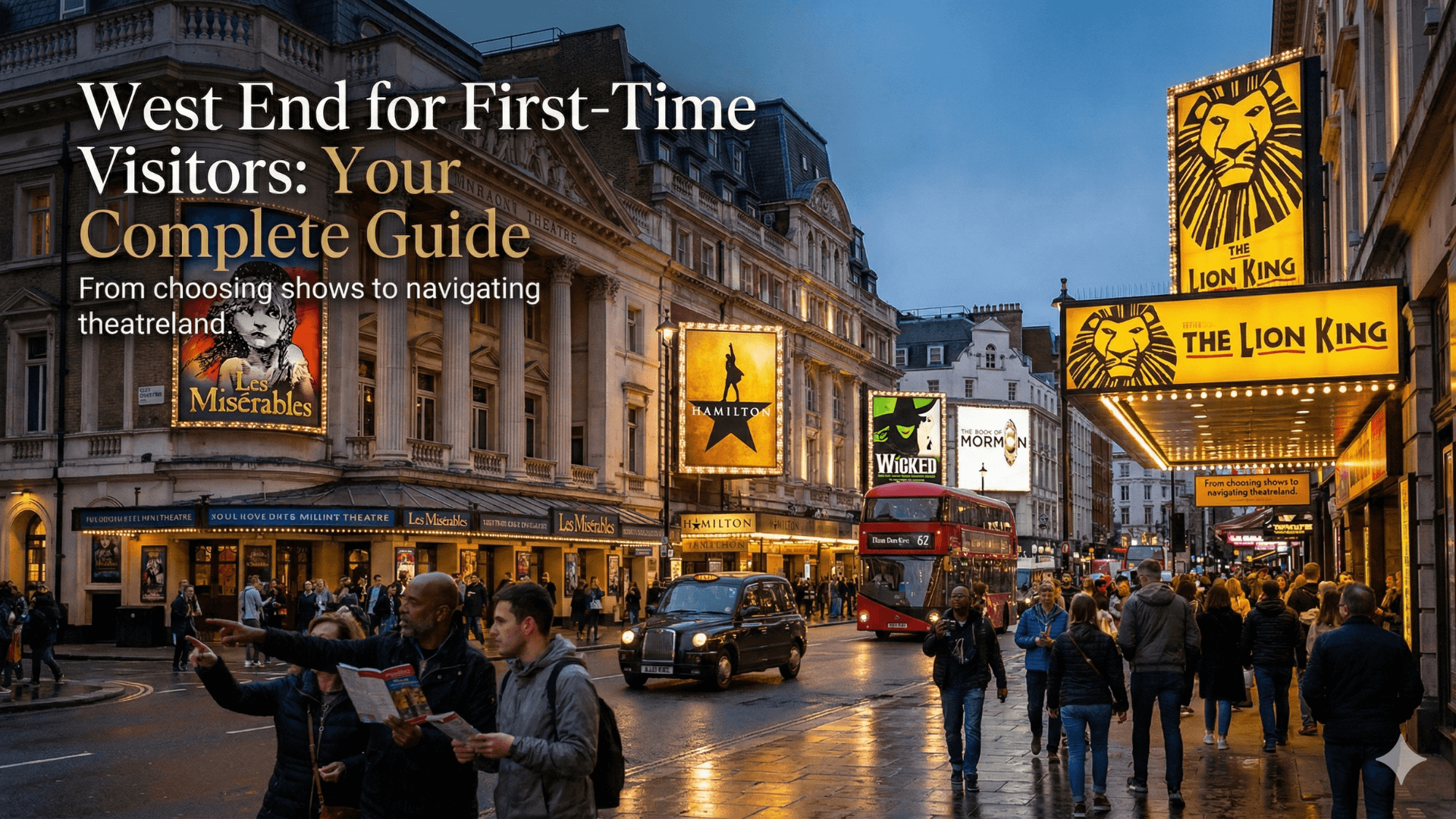
Planning your first West End trip can feel overwhelming. Forty theatres, hundreds of shows, conflicting advice about where to sit and what to see. You want to get it right—to choose shows that justify the journey and come away understanding why London's theatre district has earned its reputation.
Here's everything you need to know, from choosing your first show to navigating the theatre district like someone who's done this before.
Choosing Your First West End Show
Start With Your Interests, Not "What You Should See"
The worst first West End experience is seeing a show someone insisted was essential when it doesn't match your tastes. Love hip-hop? See Hamilton. Obsessed with The Wizard of Oz? Wicked is your show. If you prefer straight plays to musicals, that's completely valid.
The West End offers enough variety that you can find something perfect for you specifically, not just generically good.
The Safest First-Timer Choices
These shows have broad appeal and consistently deliver:
Les Misérables - Epic storytelling, stunning music, the show that best represents what West End musicals can achieve at their peak. Three hours that earn every minute.
The Lion King - Visual spectacle unlike anything else on stage. The opening sequence alone justifies your ticket. Perfect for families but adults without children love it just as much.
Hamilton - Revolutionary musical theatre that makes American history thrilling through hip-hop. Accessible despite the rapid-fire lyrics, and the energy never drops.
Wicked - The gateway musical. If you've never been to a show before, Wicked teaches you what musical theatre does well—big emotions, soaring songs, spectacle that serves story.
The Book of Mormon - Offensive but brilliant. If you liked South Park, you'll love this. If you hated South Park, skip it. It's genuinely funny, surprisingly sweet, and delivers proper Broadway craft beneath the shock humour.
For Specific Interests
If you love contemporary music: &Juliet (Max Martin pop hits), Six (Tudor history as pop concert), Moulin Rouge! (jukebox musical excess)
If you prefer drama to singing: Arcadia, 1536, Stranger Things: The First Shadow
If you're bringing children: Paddington The Musical, The Lion King, Matilda The Musical
If you want pure spectacle: Back to the Future, Moulin Rouge!, Cirque du Soleil: OVO
Understanding West End Geography
The Main Theatre Districts
Covent Garden - The heart of theatreland. Royal Opera House anchors the area, surrounded by smaller theatres and endless restaurants. Leicester Square and Charing Cross tube stations get you here.
Soho - Concentrated cluster of theatres along Shaftesbury Avenue and surrounding streets. Prince Edward Theatre, Phoenix Theatre, Apollo Theatre all within five minutes of each other. Piccadilly Circus is your tube stop.
The Strand - Aldwych Theatre, Savoy Theatre, Vaudeville Theatre all sit along or near the Strand. Quieter than Covent Garden, easier to navigate. Charing Cross tube works here too.
Leicester Square Area - The commercial centre. Odeon Leicester Square dominates, but theatres like the Gielgud and Queen's are tucked nearby. Tourist-heavy but convenient.
Getting Around
The Tube is your friend. Leicester Square, Piccadilly Circus, Covent Garden, and Charing Cross stations serve most West End theatres. You'll rarely walk more than 10 minutes from station to venue.
Walking works. The entire theatre district fits into roughly one square mile. If you're seeing multiple shows, walking between venues takes 10-15 minutes maximum.
Buses are unreliable near show times. Evening traffic around 7pm makes bus journey times unpredictable. Stick to the tube or walk.
Black cabs know every theatre. If you're running late or carrying bags, cabbies know the quickest routes. More expensive than the tube but stress-free.
Booking Your Tickets
When to Book
Popular shows: Book 2-3 months ahead for weekend performances, 4-6 weeks for weekdays. Hamilton, Wicked, Les Mis all require advance planning for decent seats.
New shows: Opening months often have better availability. Productions need time to build word-of-mouth, so initial weeks offer more choice.
Long-runners with availability: Shows like The Mousetrap rarely sell out. You can book these closer to your visit date.
Matinees: Usually easier to book than evening performances. Wednesday and Thursday matinees particularly have better availability.
Where to Sit
Stalls: Ground floor seating, closest to stage. Premium prices, most immersive experience. Look for rows 6-15 for the sweet spot—close enough to feel part of the action, far enough back to see full staging.
Dress Circle / Royal Circle: First balcony level. Often the best value—elevated view captures choreography and full stage pictures, prices lower than stalls, sightlines generally excellent. Front rows (A-D) compete with premium stalls for view quality.
Upper Circle / Grand Circle: Second balcony. Budget-friendly but steep and distant. Fine for shows where story matters more than seeing expressions, or if you're more interested in experiencing the production than analysing every detail.
Boxes: Side seating, often partially restricted view. Can be charming for atmosphere but check sightline information before booking.
Pricing Reality
West End shows aren't cheap. Premium seats for major musicals cost £80-200+. That's the reality. But options exist:
Weekday matinees typically offer lower prices than weekend evenings. Same show, different timeslot, £20-40 savings.
Day seats and rush tickets aren't reliable for first-timers with fixed travel plans. They exist but require flexibility you might not have.
Preview performances before official opening nights offer reduced prices. Quality is nearly identical—these are final dress rehearsals with audiences.
Join tickadoo+ with free membership. Earn rewards on every booking that add up to savings on future tickets or travel. Multiple shows over time make the rewards worthwhile.
Planning Your Theatre Day
Timing Your Arrival
Get there 30 minutes early. This gives you time to collect tickets (if not using mobile), find your seats, visit the bathroom, and buy interval drinks without rushing.
Programmes cost £5-8. Not essential but nice to have. They include cast information, show history, and photos.
Bag checks are standard. Larger venues security-check bags. Factor this into your arrival time.
Pre-Theatre Dining
The West End surrounds itself with restaurants understanding people need to eat before 7:30pm curtain. Some reliable options:
Covent Garden - Endless choices from Italian to Asian to British classics. Pre-theatre menus (usually 5:30-7pm) offer two courses for £20-30.
Soho - More adventurous food scene. Chinese, Japanese, Middle Eastern, and modern European all within walking distance of the theatres.
The Strand - Quieter dining, fewer crowds. Simpson's-in-the-Strand for traditional British, or smaller spots along side streets.
Book restaurant reservations. Popular pre-theatre spots fill up, especially weekends. Booking ahead saves stress.
Allow 90 minutes. Order by 6pm for a 7:30pm show. Restaurants near theatres understand the timing and won't let you miss curtain, but don't push it.
Dress Code
There isn't one. You'll see everything from jeans to ball gowns. Smart casual works perfectly—the level you'd dress for a nice restaurant.
Layer up. Victorian and Edwardian theatres can be draughty, while modern climate-controlled venues sometimes overcorrect with air conditioning. Bring a jumper or light jacket.
Comfortable shoes matter. You'll walk to the theatre, stand in queues, and walk back. Heels are fine if you're used to them, but trainers won't offend anyone.
During The Show
Interval Logistics
Most shows have a 15-20 minute interval. Use this time to:
Visit toilets. Queues form immediately, especially in women's bathrooms. Going early helps.
Order drinks before the show. Most theatres let you pre-order interval drinks, which saves massive queues later. Ask bar staff when you arrive.
Stay in your seat if you prefer. You're not required to use the interval. Some people prefer staying put and soaking in the atmosphere.
Theatre Etiquette
Phones off completely. Not on silent—off. Screen light distracts everyone behind you and annoys performers who can see it from stage.
No photos or recording. It's illegal, distracting, and gets you ejected. Enjoy the live experience without a screen.
Unwrap sweets before the show. Rustling wrappers during quiet moments drives everyone mad.
Coughing happens. If you're ill, you're ill. But try to muffle it in your elbow. Venues provide water fountains specifically for this.
Singing along is not okay. Even if you know every word to Wicked, the person next to you paid to hear the professionals, not your enthusiasm.
Standing ovations are optional. Don't feel pressured to stand if you didn't love it. Equally, don't judge others who do stand. Theatre responses are personal.
After The Show
Stage Door
If you want to meet performers, many theatres have stage doors where actors sign programmes and chat briefly with fans. This works best for:
Smaller venues. Off West End and mid-size theatres allow more interaction than massive houses like the Palladium.
Wednesday and Thursday evenings. Weekend performances see larger crowds. Midweek gives you better chances of actual conversation.
Be respectful. Performers aren't obligated to appear. If they do, be quick, be kind, and don't monopolise their time.
Common First-Timer Mistakes (And How to Avoid Them)
Booking too many shows in too few days. Theatre is exhausting. One show per day is plenty. Two leaves you drained. Three means you're not actually enjoying anything.
Choosing entirely based on recommendations. What your friend loved might not suit you. Consider your actual interests, not just "important" shows.
Arriving at the last minute. Stress ruins theatre. Build in buffer time for every step—travel, finding the venue, getting settled.
Skipping research on content warnings. Shows like Cabaret, Book of Mormon, and Stranger Things aren't for everyone. Check age ratings and content information before booking.
Forgetting to charge your phone. If you're using mobile tickets, a dead phone means you can't get in. Charge up before you leave.
Not using last-minute booking options. If your plans are flexible, same-day and reduced-price tickets sometimes become available.
Making The Most of Your First Visit
See at least two different genres. If you start with a big musical like Les Mis, try a play or smaller musical next. The West End's diversity is part of its appeal.
Explore beyond the main theatres. Off West End venues host innovative productions that feel more intimate than commercial blockbusters.
Walk through the theatre district during the day. The architecture is beautiful, the history palpable. Seeing these buildings in daylight adds context to your evening visits.
Buy programmes. They're nice souvenirs and the cast information becomes interesting later when you see those actors in other shows.
Trust your own reactions. Critics might rave about something you found boring. That's fine. Your experience is valid even if it differs from conventional wisdom.
Ready to Book Your First West End Show?
Browse all West End shows on tickadoo. Join the free membership to start earning rewards on every ticket—savings that grow with each booking.
Your first West End experience should feel special, not stressful. Choose a show you're genuinely excited about, give yourself time to enjoy the experience, and remember that London's theatre district has been doing this for 400 years.
You're going to love it.
Planning your first West End trip can feel overwhelming. Forty theatres, hundreds of shows, conflicting advice about where to sit and what to see. You want to get it right—to choose shows that justify the journey and come away understanding why London's theatre district has earned its reputation.
Here's everything you need to know, from choosing your first show to navigating the theatre district like someone who's done this before.
Choosing Your First West End Show
Start With Your Interests, Not "What You Should See"
The worst first West End experience is seeing a show someone insisted was essential when it doesn't match your tastes. Love hip-hop? See Hamilton. Obsessed with The Wizard of Oz? Wicked is your show. If you prefer straight plays to musicals, that's completely valid.
The West End offers enough variety that you can find something perfect for you specifically, not just generically good.
The Safest First-Timer Choices
These shows have broad appeal and consistently deliver:
Les Misérables - Epic storytelling, stunning music, the show that best represents what West End musicals can achieve at their peak. Three hours that earn every minute.
The Lion King - Visual spectacle unlike anything else on stage. The opening sequence alone justifies your ticket. Perfect for families but adults without children love it just as much.
Hamilton - Revolutionary musical theatre that makes American history thrilling through hip-hop. Accessible despite the rapid-fire lyrics, and the energy never drops.
Wicked - The gateway musical. If you've never been to a show before, Wicked teaches you what musical theatre does well—big emotions, soaring songs, spectacle that serves story.
The Book of Mormon - Offensive but brilliant. If you liked South Park, you'll love this. If you hated South Park, skip it. It's genuinely funny, surprisingly sweet, and delivers proper Broadway craft beneath the shock humour.
For Specific Interests
If you love contemporary music: &Juliet (Max Martin pop hits), Six (Tudor history as pop concert), Moulin Rouge! (jukebox musical excess)
If you prefer drama to singing: Arcadia, 1536, Stranger Things: The First Shadow
If you're bringing children: Paddington The Musical, The Lion King, Matilda The Musical
If you want pure spectacle: Back to the Future, Moulin Rouge!, Cirque du Soleil: OVO
Understanding West End Geography
The Main Theatre Districts
Covent Garden - The heart of theatreland. Royal Opera House anchors the area, surrounded by smaller theatres and endless restaurants. Leicester Square and Charing Cross tube stations get you here.
Soho - Concentrated cluster of theatres along Shaftesbury Avenue and surrounding streets. Prince Edward Theatre, Phoenix Theatre, Apollo Theatre all within five minutes of each other. Piccadilly Circus is your tube stop.
The Strand - Aldwych Theatre, Savoy Theatre, Vaudeville Theatre all sit along or near the Strand. Quieter than Covent Garden, easier to navigate. Charing Cross tube works here too.
Leicester Square Area - The commercial centre. Odeon Leicester Square dominates, but theatres like the Gielgud and Queen's are tucked nearby. Tourist-heavy but convenient.
Getting Around
The Tube is your friend. Leicester Square, Piccadilly Circus, Covent Garden, and Charing Cross stations serve most West End theatres. You'll rarely walk more than 10 minutes from station to venue.
Walking works. The entire theatre district fits into roughly one square mile. If you're seeing multiple shows, walking between venues takes 10-15 minutes maximum.
Buses are unreliable near show times. Evening traffic around 7pm makes bus journey times unpredictable. Stick to the tube or walk.
Black cabs know every theatre. If you're running late or carrying bags, cabbies know the quickest routes. More expensive than the tube but stress-free.
Booking Your Tickets
When to Book
Popular shows: Book 2-3 months ahead for weekend performances, 4-6 weeks for weekdays. Hamilton, Wicked, Les Mis all require advance planning for decent seats.
New shows: Opening months often have better availability. Productions need time to build word-of-mouth, so initial weeks offer more choice.
Long-runners with availability: Shows like The Mousetrap rarely sell out. You can book these closer to your visit date.
Matinees: Usually easier to book than evening performances. Wednesday and Thursday matinees particularly have better availability.
Where to Sit
Stalls: Ground floor seating, closest to stage. Premium prices, most immersive experience. Look for rows 6-15 for the sweet spot—close enough to feel part of the action, far enough back to see full staging.
Dress Circle / Royal Circle: First balcony level. Often the best value—elevated view captures choreography and full stage pictures, prices lower than stalls, sightlines generally excellent. Front rows (A-D) compete with premium stalls for view quality.
Upper Circle / Grand Circle: Second balcony. Budget-friendly but steep and distant. Fine for shows where story matters more than seeing expressions, or if you're more interested in experiencing the production than analysing every detail.
Boxes: Side seating, often partially restricted view. Can be charming for atmosphere but check sightline information before booking.
Pricing Reality
West End shows aren't cheap. Premium seats for major musicals cost £80-200+. That's the reality. But options exist:
Weekday matinees typically offer lower prices than weekend evenings. Same show, different timeslot, £20-40 savings.
Day seats and rush tickets aren't reliable for first-timers with fixed travel plans. They exist but require flexibility you might not have.
Preview performances before official opening nights offer reduced prices. Quality is nearly identical—these are final dress rehearsals with audiences.
Join tickadoo+ with free membership. Earn rewards on every booking that add up to savings on future tickets or travel. Multiple shows over time make the rewards worthwhile.
Planning Your Theatre Day
Timing Your Arrival
Get there 30 minutes early. This gives you time to collect tickets (if not using mobile), find your seats, visit the bathroom, and buy interval drinks without rushing.
Programmes cost £5-8. Not essential but nice to have. They include cast information, show history, and photos.
Bag checks are standard. Larger venues security-check bags. Factor this into your arrival time.
Pre-Theatre Dining
The West End surrounds itself with restaurants understanding people need to eat before 7:30pm curtain. Some reliable options:
Covent Garden - Endless choices from Italian to Asian to British classics. Pre-theatre menus (usually 5:30-7pm) offer two courses for £20-30.
Soho - More adventurous food scene. Chinese, Japanese, Middle Eastern, and modern European all within walking distance of the theatres.
The Strand - Quieter dining, fewer crowds. Simpson's-in-the-Strand for traditional British, or smaller spots along side streets.
Book restaurant reservations. Popular pre-theatre spots fill up, especially weekends. Booking ahead saves stress.
Allow 90 minutes. Order by 6pm for a 7:30pm show. Restaurants near theatres understand the timing and won't let you miss curtain, but don't push it.
Dress Code
There isn't one. You'll see everything from jeans to ball gowns. Smart casual works perfectly—the level you'd dress for a nice restaurant.
Layer up. Victorian and Edwardian theatres can be draughty, while modern climate-controlled venues sometimes overcorrect with air conditioning. Bring a jumper or light jacket.
Comfortable shoes matter. You'll walk to the theatre, stand in queues, and walk back. Heels are fine if you're used to them, but trainers won't offend anyone.
During The Show
Interval Logistics
Most shows have a 15-20 minute interval. Use this time to:
Visit toilets. Queues form immediately, especially in women's bathrooms. Going early helps.
Order drinks before the show. Most theatres let you pre-order interval drinks, which saves massive queues later. Ask bar staff when you arrive.
Stay in your seat if you prefer. You're not required to use the interval. Some people prefer staying put and soaking in the atmosphere.
Theatre Etiquette
Phones off completely. Not on silent—off. Screen light distracts everyone behind you and annoys performers who can see it from stage.
No photos or recording. It's illegal, distracting, and gets you ejected. Enjoy the live experience without a screen.
Unwrap sweets before the show. Rustling wrappers during quiet moments drives everyone mad.
Coughing happens. If you're ill, you're ill. But try to muffle it in your elbow. Venues provide water fountains specifically for this.
Singing along is not okay. Even if you know every word to Wicked, the person next to you paid to hear the professionals, not your enthusiasm.
Standing ovations are optional. Don't feel pressured to stand if you didn't love it. Equally, don't judge others who do stand. Theatre responses are personal.
After The Show
Stage Door
If you want to meet performers, many theatres have stage doors where actors sign programmes and chat briefly with fans. This works best for:
Smaller venues. Off West End and mid-size theatres allow more interaction than massive houses like the Palladium.
Wednesday and Thursday evenings. Weekend performances see larger crowds. Midweek gives you better chances of actual conversation.
Be respectful. Performers aren't obligated to appear. If they do, be quick, be kind, and don't monopolise their time.
Common First-Timer Mistakes (And How to Avoid Them)
Booking too many shows in too few days. Theatre is exhausting. One show per day is plenty. Two leaves you drained. Three means you're not actually enjoying anything.
Choosing entirely based on recommendations. What your friend loved might not suit you. Consider your actual interests, not just "important" shows.
Arriving at the last minute. Stress ruins theatre. Build in buffer time for every step—travel, finding the venue, getting settled.
Skipping research on content warnings. Shows like Cabaret, Book of Mormon, and Stranger Things aren't for everyone. Check age ratings and content information before booking.
Forgetting to charge your phone. If you're using mobile tickets, a dead phone means you can't get in. Charge up before you leave.
Not using last-minute booking options. If your plans are flexible, same-day and reduced-price tickets sometimes become available.
Making The Most of Your First Visit
See at least two different genres. If you start with a big musical like Les Mis, try a play or smaller musical next. The West End's diversity is part of its appeal.
Explore beyond the main theatres. Off West End venues host innovative productions that feel more intimate than commercial blockbusters.
Walk through the theatre district during the day. The architecture is beautiful, the history palpable. Seeing these buildings in daylight adds context to your evening visits.
Buy programmes. They're nice souvenirs and the cast information becomes interesting later when you see those actors in other shows.
Trust your own reactions. Critics might rave about something you found boring. That's fine. Your experience is valid even if it differs from conventional wisdom.
Ready to Book Your First West End Show?
Browse all West End shows on tickadoo. Join the free membership to start earning rewards on every ticket—savings that grow with each booking.
Your first West End experience should feel special, not stressful. Choose a show you're genuinely excited about, give yourself time to enjoy the experience, and remember that London's theatre district has been doing this for 400 years.
You're going to love it.
Planning your first West End trip can feel overwhelming. Forty theatres, hundreds of shows, conflicting advice about where to sit and what to see. You want to get it right—to choose shows that justify the journey and come away understanding why London's theatre district has earned its reputation.
Here's everything you need to know, from choosing your first show to navigating the theatre district like someone who's done this before.
Choosing Your First West End Show
Start With Your Interests, Not "What You Should See"
The worst first West End experience is seeing a show someone insisted was essential when it doesn't match your tastes. Love hip-hop? See Hamilton. Obsessed with The Wizard of Oz? Wicked is your show. If you prefer straight plays to musicals, that's completely valid.
The West End offers enough variety that you can find something perfect for you specifically, not just generically good.
The Safest First-Timer Choices
These shows have broad appeal and consistently deliver:
Les Misérables - Epic storytelling, stunning music, the show that best represents what West End musicals can achieve at their peak. Three hours that earn every minute.
The Lion King - Visual spectacle unlike anything else on stage. The opening sequence alone justifies your ticket. Perfect for families but adults without children love it just as much.
Hamilton - Revolutionary musical theatre that makes American history thrilling through hip-hop. Accessible despite the rapid-fire lyrics, and the energy never drops.
Wicked - The gateway musical. If you've never been to a show before, Wicked teaches you what musical theatre does well—big emotions, soaring songs, spectacle that serves story.
The Book of Mormon - Offensive but brilliant. If you liked South Park, you'll love this. If you hated South Park, skip it. It's genuinely funny, surprisingly sweet, and delivers proper Broadway craft beneath the shock humour.
For Specific Interests
If you love contemporary music: &Juliet (Max Martin pop hits), Six (Tudor history as pop concert), Moulin Rouge! (jukebox musical excess)
If you prefer drama to singing: Arcadia, 1536, Stranger Things: The First Shadow
If you're bringing children: Paddington The Musical, The Lion King, Matilda The Musical
If you want pure spectacle: Back to the Future, Moulin Rouge!, Cirque du Soleil: OVO
Understanding West End Geography
The Main Theatre Districts
Covent Garden - The heart of theatreland. Royal Opera House anchors the area, surrounded by smaller theatres and endless restaurants. Leicester Square and Charing Cross tube stations get you here.
Soho - Concentrated cluster of theatres along Shaftesbury Avenue and surrounding streets. Prince Edward Theatre, Phoenix Theatre, Apollo Theatre all within five minutes of each other. Piccadilly Circus is your tube stop.
The Strand - Aldwych Theatre, Savoy Theatre, Vaudeville Theatre all sit along or near the Strand. Quieter than Covent Garden, easier to navigate. Charing Cross tube works here too.
Leicester Square Area - The commercial centre. Odeon Leicester Square dominates, but theatres like the Gielgud and Queen's are tucked nearby. Tourist-heavy but convenient.
Getting Around
The Tube is your friend. Leicester Square, Piccadilly Circus, Covent Garden, and Charing Cross stations serve most West End theatres. You'll rarely walk more than 10 minutes from station to venue.
Walking works. The entire theatre district fits into roughly one square mile. If you're seeing multiple shows, walking between venues takes 10-15 minutes maximum.
Buses are unreliable near show times. Evening traffic around 7pm makes bus journey times unpredictable. Stick to the tube or walk.
Black cabs know every theatre. If you're running late or carrying bags, cabbies know the quickest routes. More expensive than the tube but stress-free.
Booking Your Tickets
When to Book
Popular shows: Book 2-3 months ahead for weekend performances, 4-6 weeks for weekdays. Hamilton, Wicked, Les Mis all require advance planning for decent seats.
New shows: Opening months often have better availability. Productions need time to build word-of-mouth, so initial weeks offer more choice.
Long-runners with availability: Shows like The Mousetrap rarely sell out. You can book these closer to your visit date.
Matinees: Usually easier to book than evening performances. Wednesday and Thursday matinees particularly have better availability.
Where to Sit
Stalls: Ground floor seating, closest to stage. Premium prices, most immersive experience. Look for rows 6-15 for the sweet spot—close enough to feel part of the action, far enough back to see full staging.
Dress Circle / Royal Circle: First balcony level. Often the best value—elevated view captures choreography and full stage pictures, prices lower than stalls, sightlines generally excellent. Front rows (A-D) compete with premium stalls for view quality.
Upper Circle / Grand Circle: Second balcony. Budget-friendly but steep and distant. Fine for shows where story matters more than seeing expressions, or if you're more interested in experiencing the production than analysing every detail.
Boxes: Side seating, often partially restricted view. Can be charming for atmosphere but check sightline information before booking.
Pricing Reality
West End shows aren't cheap. Premium seats for major musicals cost £80-200+. That's the reality. But options exist:
Weekday matinees typically offer lower prices than weekend evenings. Same show, different timeslot, £20-40 savings.
Day seats and rush tickets aren't reliable for first-timers with fixed travel plans. They exist but require flexibility you might not have.
Preview performances before official opening nights offer reduced prices. Quality is nearly identical—these are final dress rehearsals with audiences.
Join tickadoo+ with free membership. Earn rewards on every booking that add up to savings on future tickets or travel. Multiple shows over time make the rewards worthwhile.
Planning Your Theatre Day
Timing Your Arrival
Get there 30 minutes early. This gives you time to collect tickets (if not using mobile), find your seats, visit the bathroom, and buy interval drinks without rushing.
Programmes cost £5-8. Not essential but nice to have. They include cast information, show history, and photos.
Bag checks are standard. Larger venues security-check bags. Factor this into your arrival time.
Pre-Theatre Dining
The West End surrounds itself with restaurants understanding people need to eat before 7:30pm curtain. Some reliable options:
Covent Garden - Endless choices from Italian to Asian to British classics. Pre-theatre menus (usually 5:30-7pm) offer two courses for £20-30.
Soho - More adventurous food scene. Chinese, Japanese, Middle Eastern, and modern European all within walking distance of the theatres.
The Strand - Quieter dining, fewer crowds. Simpson's-in-the-Strand for traditional British, or smaller spots along side streets.
Book restaurant reservations. Popular pre-theatre spots fill up, especially weekends. Booking ahead saves stress.
Allow 90 minutes. Order by 6pm for a 7:30pm show. Restaurants near theatres understand the timing and won't let you miss curtain, but don't push it.
Dress Code
There isn't one. You'll see everything from jeans to ball gowns. Smart casual works perfectly—the level you'd dress for a nice restaurant.
Layer up. Victorian and Edwardian theatres can be draughty, while modern climate-controlled venues sometimes overcorrect with air conditioning. Bring a jumper or light jacket.
Comfortable shoes matter. You'll walk to the theatre, stand in queues, and walk back. Heels are fine if you're used to them, but trainers won't offend anyone.
During The Show
Interval Logistics
Most shows have a 15-20 minute interval. Use this time to:
Visit toilets. Queues form immediately, especially in women's bathrooms. Going early helps.
Order drinks before the show. Most theatres let you pre-order interval drinks, which saves massive queues later. Ask bar staff when you arrive.
Stay in your seat if you prefer. You're not required to use the interval. Some people prefer staying put and soaking in the atmosphere.
Theatre Etiquette
Phones off completely. Not on silent—off. Screen light distracts everyone behind you and annoys performers who can see it from stage.
No photos or recording. It's illegal, distracting, and gets you ejected. Enjoy the live experience without a screen.
Unwrap sweets before the show. Rustling wrappers during quiet moments drives everyone mad.
Coughing happens. If you're ill, you're ill. But try to muffle it in your elbow. Venues provide water fountains specifically for this.
Singing along is not okay. Even if you know every word to Wicked, the person next to you paid to hear the professionals, not your enthusiasm.
Standing ovations are optional. Don't feel pressured to stand if you didn't love it. Equally, don't judge others who do stand. Theatre responses are personal.
After The Show
Stage Door
If you want to meet performers, many theatres have stage doors where actors sign programmes and chat briefly with fans. This works best for:
Smaller venues. Off West End and mid-size theatres allow more interaction than massive houses like the Palladium.
Wednesday and Thursday evenings. Weekend performances see larger crowds. Midweek gives you better chances of actual conversation.
Be respectful. Performers aren't obligated to appear. If they do, be quick, be kind, and don't monopolise their time.
Common First-Timer Mistakes (And How to Avoid Them)
Booking too many shows in too few days. Theatre is exhausting. One show per day is plenty. Two leaves you drained. Three means you're not actually enjoying anything.
Choosing entirely based on recommendations. What your friend loved might not suit you. Consider your actual interests, not just "important" shows.
Arriving at the last minute. Stress ruins theatre. Build in buffer time for every step—travel, finding the venue, getting settled.
Skipping research on content warnings. Shows like Cabaret, Book of Mormon, and Stranger Things aren't for everyone. Check age ratings and content information before booking.
Forgetting to charge your phone. If you're using mobile tickets, a dead phone means you can't get in. Charge up before you leave.
Not using last-minute booking options. If your plans are flexible, same-day and reduced-price tickets sometimes become available.
Making The Most of Your First Visit
See at least two different genres. If you start with a big musical like Les Mis, try a play or smaller musical next. The West End's diversity is part of its appeal.
Explore beyond the main theatres. Off West End venues host innovative productions that feel more intimate than commercial blockbusters.
Walk through the theatre district during the day. The architecture is beautiful, the history palpable. Seeing these buildings in daylight adds context to your evening visits.
Buy programmes. They're nice souvenirs and the cast information becomes interesting later when you see those actors in other shows.
Trust your own reactions. Critics might rave about something you found boring. That's fine. Your experience is valid even if it differs from conventional wisdom.
Ready to Book Your First West End Show?
Browse all West End shows on tickadoo. Join the free membership to start earning rewards on every ticket—savings that grow with each booking.
Your first West End experience should feel special, not stressful. Choose a show you're genuinely excited about, give yourself time to enjoy the experience, and remember that London's theatre district has been doing this for 400 years.
You're going to love it.
Share this post:
Share this post:
Share this post: