Is the London Eye Worth It? The Honest Answer
At £45 for a standard adult ticket and a half-hour ride, the London Eye asks you to commit before you can really judge whether you'll enjoy it. That's why "is the London Eye worth it?" is one of the most-searched questions about a London visit. This is an honest attempt to answer it.
The short answer: yes, for most first-time visitors, especially if you ride at the right time of day. The longer answer depends on what you're hoping to get out of it and what else is on your itinerary. Here's everything you need to know before you book a London Eye Admission ticket.
What the London Eye Actually Is
The London Eye is a 135-metre (443-foot) observation wheel on the South Bank of the Thames, directly opposite the Palace of Westminster. It opened on 31 December 1999 to mark the millennium and was the world's tallest Ferris wheel from 2000 until 2006. It still holds the record for the tallest cantilevered observation wheel in Europe.
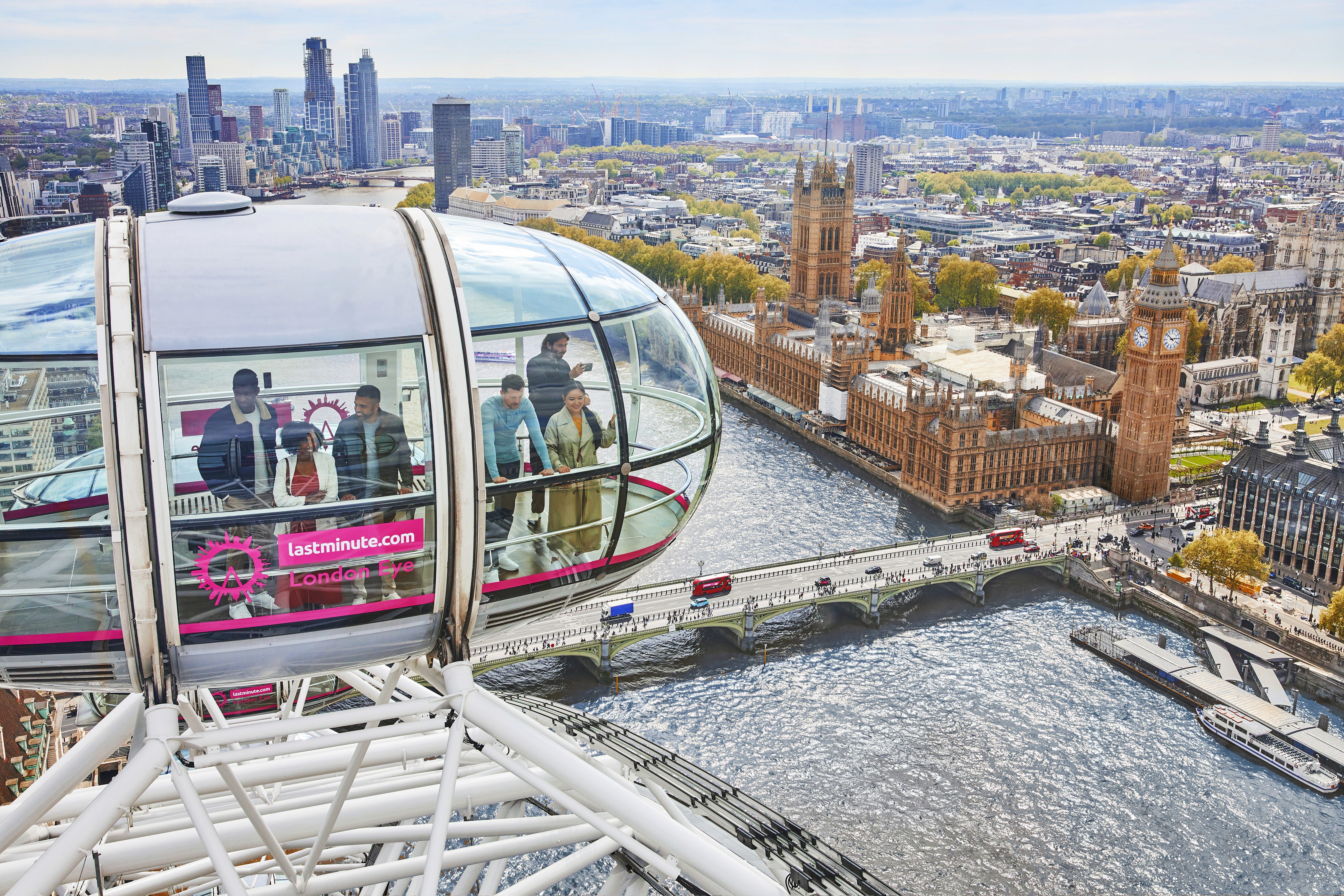
There are 32 glass capsules, one for each of the boroughs of London, mounted on the outside of the wheel rather than hanging from it. The wheel turns continuously at about 0.6 miles per hour, so you board while it's moving and one full rotation takes roughly 30 minutes. Each capsule holds up to 25 people, is climate controlled, and has a bench in the middle but plenty of room to walk around for different angles.
On a clear day you can see up to 25 miles in any direction. It is the most-visited paid attraction in the United Kingdom, with around 3 million riders a year.
What You Actually See From the Top
This is where the London Eye genuinely earns its ticket. The South Bank position is the single best vantage point in central London for the postcard landmarks.
From the highest point of the wheel you can pick out the Houses of Parliament and Big Ben directly below, Westminster Abbey behind them, Buckingham Palace just beyond, and the green sweep of St James's Park and Hyde Park to the west. To the east, the Thames curves towards the City: St Paul's Cathedral, the Walkie-Talkie, the Cheesegrater, the Gherkin, and the Shard. North, you can usually make out the BT Tower and the dome of the Royal Albert Hall. On clear winter days, Wembley Stadium's arch is visible roughly 9 miles away.
The view is genuinely panoramic. Because the capsules sit on the outside of the wheel rather than hanging beneath it, there's nothing above or below you blocking sightlines. That is the single biggest advantage over a fixed observation deck.
The Best Time to Ride the London Eye
When you ride matters as much as whether you ride. The same ticket can feel like £45 well spent or a waste, depending on timing.
Best overall: 45 minutes before sunset. You board in daylight, watch the city turn gold during the rotation, and disembark just as the lights come on. You essentially get two views for one ticket. Check sunset times before you book. In winter that means a mid-afternoon slot, in midsummer it's nearly 9 pm.
Best for clarity: weekday mornings, 10 to 11 am. Cooler air carries further, queues are short, and the light is flat enough to read the cityscape without squinting into the sun.
Best for atmosphere: after dark. The Eye runs until around 9 pm most of the year and later in summer. The whole city lights up beneath you and the capsules feel quieter. The view is less expansive but more cinematic.
Worst times: summer weekend afternoons, between 1 and 4 pm. Queues are long even with timed tickets, the capsules are warm, and the sun glare washes out photographs to the south and west.
The Eye is closed for annual maintenance in January, usually for around two weeks. Check the official calendar before booking a January trip.
Standard vs Fast-Track vs Champagne: Which Ticket Is Worth Buying?
There are three main ticket tiers and the right one depends almost entirely on when you're going.
Standard Admission is the default £45 ticket. It includes a timed boarding slot, meaning you choose a 30-minute window when you book and arrive 10 to 15 minutes before. In quieter months and at quieter times of day, this is all you need. The 4D pre-flight experience is included.
Fast-Track tickets cost the same on most days and get you a separate, shorter queue. The catch is that the London Eye uses dynamic pricing, so on peak weekends a Fast-Track ticket can be the same price as a queueing standard ticket, or even cheaper if standard tickets are nearly sold out. If you're visiting in July, August, or December, or any school holiday, the Fast-Track option saves 30 to 60 minutes of queueing and is worth it.
Champagne Experience adds a glass of champagne (or a soft drink) to your capsule and works out at roughly £15 more than standard. It's a nice touch for a proposal or an anniversary, but the view doesn't get any better with a glass in your hand.
If you're visiting in December and want to ride at night with the festive lights on, the Christmas at the London Eye ticket bundles a seasonal experience at a lower entry price for the late slots.
A quick word on combined tickets: the London Eye is owned by Merlin Entertainments, which also runs SEA LIFE London Aquarium next door. Combined tickets exist but are only worth it if you'd already planned to do both. The Aquarium alone is fine for families with young children but not a must-do for adults.
London Eye vs The Shard vs Sky Garden: How They Compare
If you only have time for one elevated view of London, which is it?
The London Eye wins on position. It's right in the middle of the postcard view: Parliament, Westminster, the Thames bend, all visible at the level of the buildings themselves. 135 metres is high enough to be impressive, low enough that you can still pick out faces in the streets and recognise the geography of the river.
The View from The Shard wins on height. At 244 metres on the top public deck it's nearly twice as tall as the Eye and you can see further out, but the trade-off is that you're looking down on the iconic landmarks from above, not across at them. Tickets are around £24, which is also notably cheaper than the Eye. The Shard is the better view for repeat visitors and on a clear day; the Eye is the better view for first-timers and for photographs.
Sky Garden at the top of the Walkie-Talkie is free, but you need to book a 15-minute slot weeks in advance and the actual view, while pleasant, faces the wrong way for many of the famous landmarks. It's the best free view in London; it is not the best view in London.
If you want a moving view rather than a fixed one, a Thames sightseeing cruise from Westminster from around £15 covers the same stretch of river at street level and is a genuinely different experience worth pairing with the Eye, not choosing instead of it.
Who the London Eye Is Best For
First-time visitors to London. If it's your first trip, the Eye gives you a map of the city in 30 minutes. Everything you're about to walk past for the rest of your stay is laid out below you, in context, with the river as a reference line. That orientation alone is worth the ticket.
Families with children. The capsules are enclosed and accessible, the wheel turns slowly enough that nobody finds it scary, and 30 minutes is short enough to hold a child's attention. Strollers are accommodated. Under-3s ride free.
Couples on a short trip. Book a sunset slot, add the Champagne option, walk along the South Bank afterwards for dinner. It's a low-effort, high-payoff hour.
Photographers. Specifically photographers with a smartphone or compact camera. The lighting and shake conditions inside the capsule are tricky for big lenses, but a phone shoots through the glass with very little reflection if you press the lens against the pane and turn off the flash.
Who Should Think Twice
Anyone who's been before. The view doesn't change. If you rode the Eye on a school trip in 2008, you've already had this experience.
Anyone on a tight budget visiting London for a week or more. £45 for a half hour adds up if you're trying to cover the city's main attractions, especially when the Sky Garden is free and the Shard is cheaper. Consider the Go City London Pass if you plan to combine the Eye with multiple paid attractions like Buckingham Palace or Westminster Abbey. It pays back at three or four attractions.
People with serious vertigo. The capsules are fully enclosed and feel secure, but the floor is glass-edged and you can see the ground the whole time. There is nowhere to hide from the view, which is rather the point.
Anyone visiting on a heavily overcast or rainy day. The Eye doesn't refund or rebook for weather. If your trip is short and the forecast is grey for every day of it, ride it anyway , at least the lights come up at the end. If you have flexibility, move your booking to a better day.
Insider Tips for Getting the Most Out of Your Ride
Walk anticlockwise in the capsule. Everyone naturally drifts towards the front-facing view, but the wheel rotates, so the "front" changes constantly. Walk around opposite to the rotation and you'll see new things continuously rather than watching the same view drift past.
Position yourself for Parliament. The Houses of Parliament are on the north-east side of the wheel at boarding, which means they're directly below you at the 11 o'clock position of your rotation. Stand on the north-facing side of the capsule when you board and you'll be in the right place when the iconic view appears.
Skip the 4D experience if you're tight on time. The pre-flight 4D film is included but adds 10 to 15 minutes and is genuinely unmemorable. If you have a tight timed slot for dinner or a West End show, walk past the cinema entrance and go straight to boarding.
Bring a light jumper in summer. The capsules are air-conditioned hard on hot days. If you queued in 28°C heat you'll arrive sweating, and the contrast can be uncomfortable.
Don't tap on the glass. The capsules are pressurised slightly differently from outside, which is why you don't hear traffic. Hard taps make a hollow boom that startles everyone in the capsule, which staff politely but firmly mention.
Save the South Bank walk for after. Once you disembark, turn east and walk towards Waterloo Bridge. The Royal Festival Hall, Hayward Gallery, BFI, and the National Theatre are all within ten minutes, with food and drink that doesn't have the marked-up prices of the riverside chains immediately next to the Eye.
The Bottom Line
The London Eye is worth it for most people who haven't been before, especially if you ride near sunset on a clear day. The view is the best central-London view you can buy. £45 is not cheap for half an hour, but it is genuinely the city's most useful orientation tool on day one of a trip and it shows you things you cannot see from any other vantage point in central London.
If you're visiting on a peak day, pay the small premium for Fast-Track tickets , the time saved is worth more than the few extra pounds. If you're visiting on a quiet weekday, the standard ticket is all you need.
If you've already done it once and you're trying to decide whether to go again, the answer is probably no. Pick one of the alternatives above. If it's your first trip, book a sunset slot, bring a light jumper, walk the South Bank afterwards. You'll understand London a lot better in 30 minutes than you would in three hours on foot.
Frequently Asked Questions
How long does the London Eye take?
One full rotation takes about 30 minutes. Add 10 to 15 minutes of arrival and queueing if you have a standard ticket, longer at peak times.
Is the London Eye worth doing at night?
Yes. Night rides are quieter, the city is fully lit, and the capsules feel more intimate. The view is less expansive but more atmospheric. Sunset slots that overlap into darkness are the single best timing.
Do I need to book the London Eye in advance?
Yes, especially on weekends, in summer, and during school holidays. All tickets are timed, and walking up without a booking can mean a 2-hour queue or no availability at all. Off-peak weekday mornings in November or February you can sometimes walk up.
Can you stop the London Eye?
Only for accessibility boarding. The wheel slows or stops briefly for wheelchair users and anyone who needs extra time. It doesn't pause at the top for photo ops.
Is the London Eye scary?
Not for most people. The capsules are fully enclosed, motion is gentle, and there's no exposed edge. If you have severe vertigo you'll feel the height, but the experience is closer to a calm lift than a fairground ride.
Are capsules shared with other people?
Yes, standard capsules are shared with up to 25 people. There is plenty of room to find your own corner. Private-capsule packages exist for events and proposals but cost several hundred pounds.
How much is a London Eye ticket?
Standard adult admission is £45 for direct entry. Fast-Track is similar or sometimes lower depending on the day. Children under 3 ride free, children 3 to 15 pay a reduced rate. Family bundles and combined tickets with other Merlin attractions can lower the per-person cost.
Is the London Eye worth it in winter?
Yes, arguably more than summer. Air is clearer, queues are shorter, sunset is at a civilised hour, and the Christmas lights from late November are spectacular from the top.
Contributing writer at tickadoo, covering the best experiences, attractions and shows around the world.