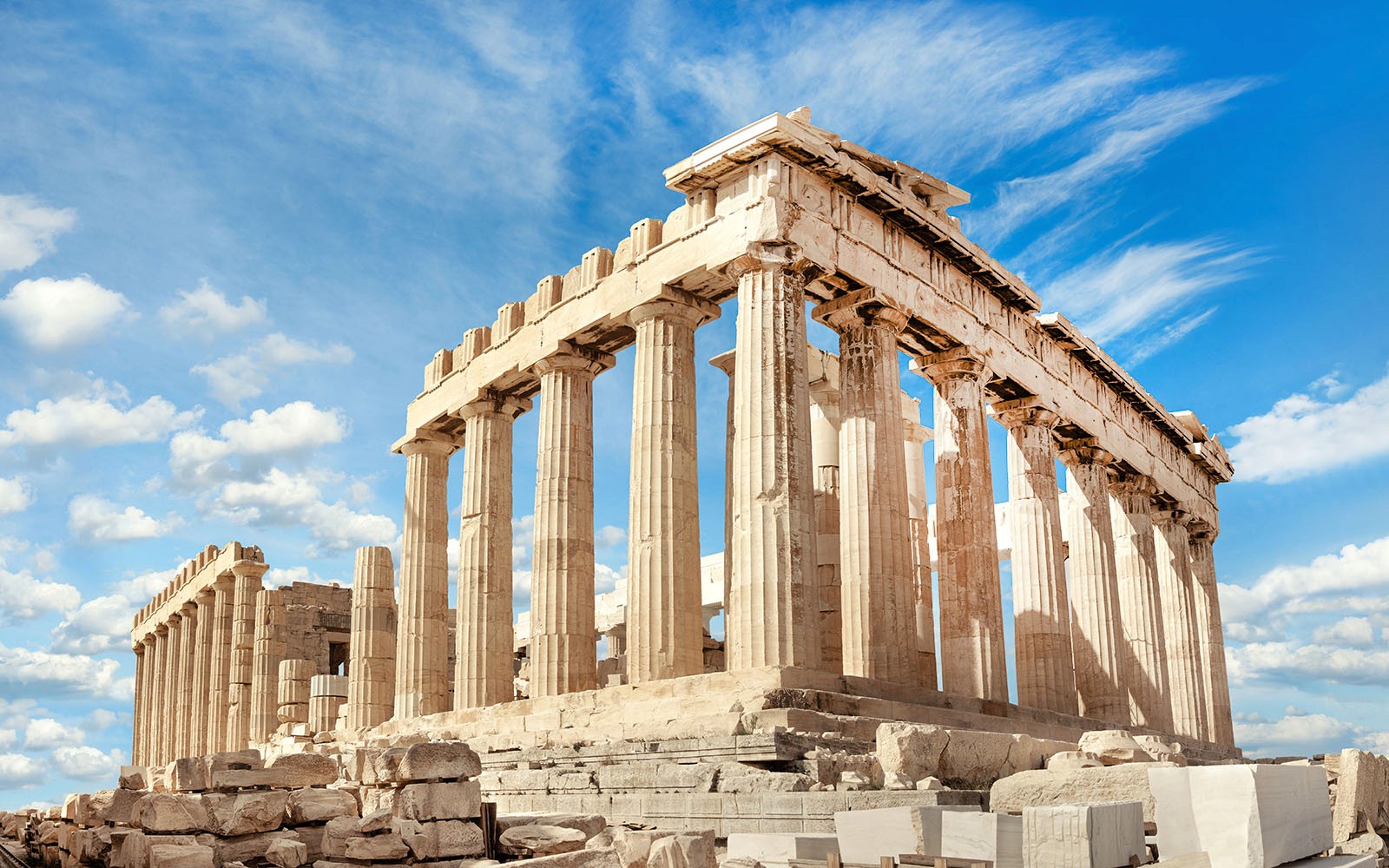
Some monuments earn their reputations gradually. The Acropolis of Athens earned its own about 2,400 years ago and has never let it go. The flat-topped rock rising above the modern city carries the Parthenon, the Erechtheion with its Caryatids, and the gateway through which every visitor since Pericles has climbed, and in 2026 it looks better than it has in living memory: the scaffolding came off the Parthenon's western facade in late 2025, giving today's visitors the clearest view of the temple's famous front in roughly two centuries.
It is also a sight that punishes the unprepared. Entry runs on timed slots with a daily visitor cap, summer mornings sell through, there is not a scrap of shade on the summit, and the marble underfoot has been polished to glass by twenty-five centuries of footsteps. This guide covers how to do it properly: which ticket or tour to choose, when to climb, how the separate Acropolis Museum fits in, and the practical details that make the difference between a hot queue and one of the great mornings in European travel. Prices below are live tickadoo prices, verified in July 2026.
The Acropolis at a glance
- The essentials: the Parthenon, Erechtheion, Propylaea and Temple of Athena Nike on the summit, plus two ancient theatres on the south slope, all on one ticket.
- Entry: timed slots with a daily visitor cap of around 20,000; summer slots sell out, so book ahead. Entry with audio guide from €39 on tickadoo, guided tours from €34.
- When to climb: the 8am opening or after 3pm. The 10am to 2pm window is the crush, and on extreme-heat days the site has closed at midday in recent summers.
- The 2026 bonus: the Parthenon's western facade is free of scaffolding for the first time in around 200 years.
- Do not forget: the Acropolis Museum is a separate ticket, and it is superb. Sturdy shoes; the marble paths are genuinely slippery.
What you will see on the rock
The Parthenon is the headline, built between 447 and 432 BC as the temple of Athena and still the most influential building in Western architecture. But the summit is an ensemble, and the supporting cast deserves its billing. You enter through the Propylaea, the monumental marble gateway; the little Temple of Athena Nike perches on its bastion to your right as you climb. Across from the Parthenon stands the Erechtheion, the strangest and most sacred of the temples, its southern porch held up by the six Caryatids, sculpted maidens who have carried the roof on their heads for two and a half millennia (five of the originals stand in the Acropolis Museum; these are faithful casts).
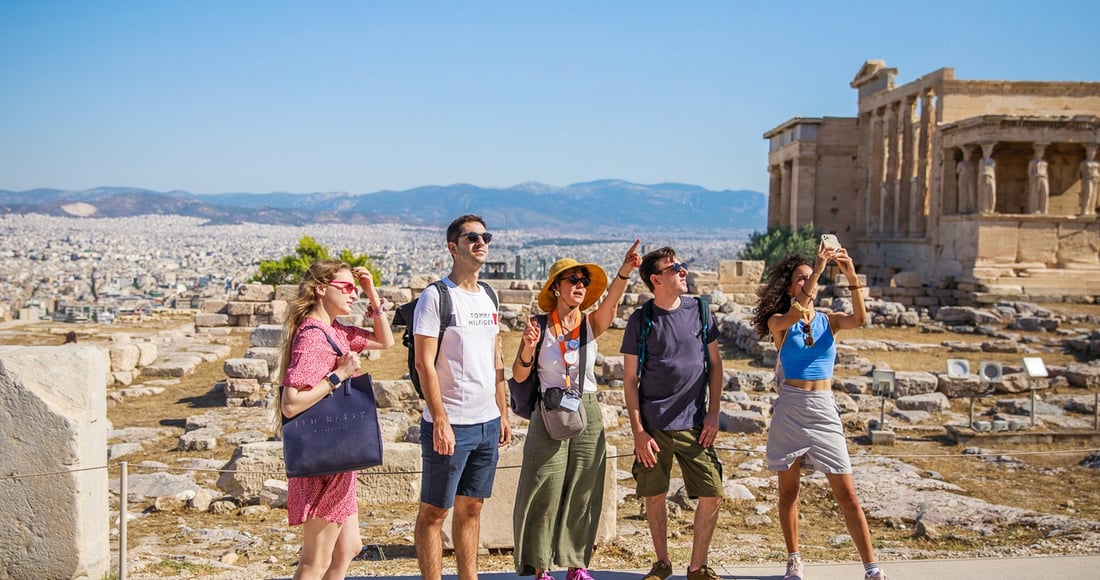
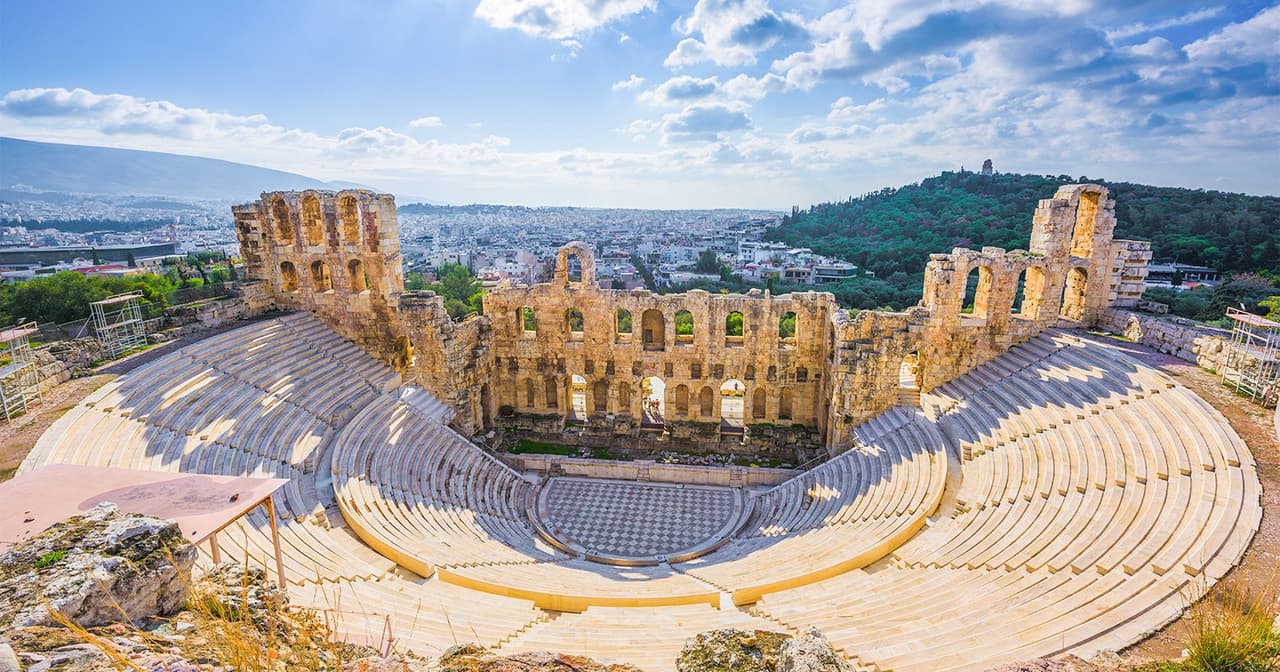
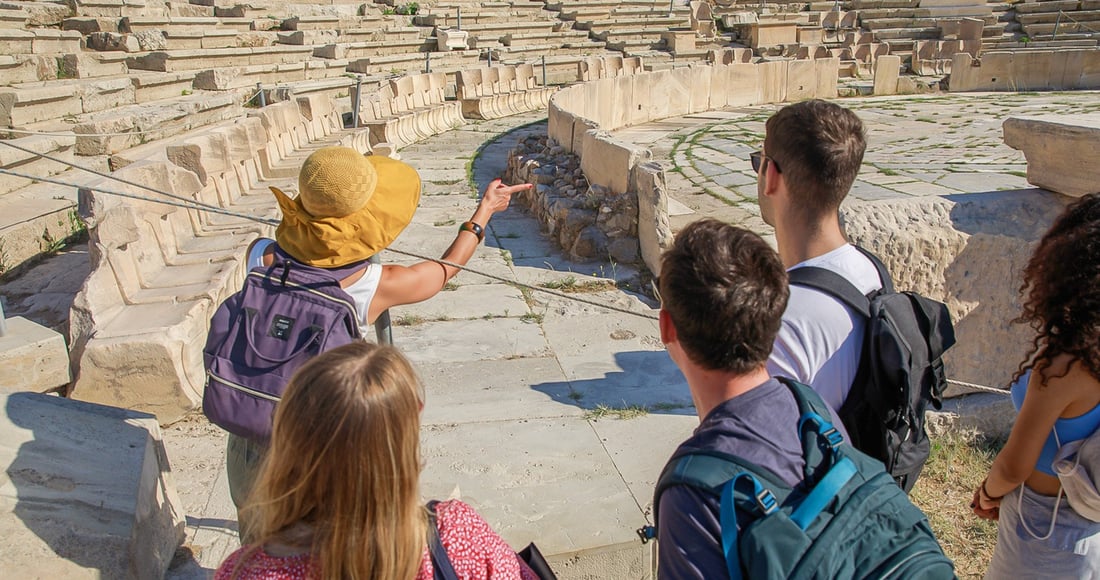
The same ticket covers the south slope, which most visitors rush past and should not: the Theatre of Dionysus, where the plays of Sophocles and Euripides premiered, and the Odeon of Herodes Atticus, the Roman-era theatre that still hosts summer performances beneath the rock. Allow 90 minutes to two hours on the hill itself, more if the theatres get their due. Restoration work continues inside the Parthenon, as it will for years, but the exterior now stands more open to view than any living visitor has seen it.
Tickets, timed slots and how to choose
Since 2023 the Acropolis has run on timed entry: you book a one-hour arrival window, the day is capped at roughly 20,000 visitors, and in July and August the morning and evening slots are the first to disappear. The practical consequence is simple: decide your day in advance and book it, because turning up on spec in summer means taking whatever slot is left, usually the hottest one. These are the live prices on tickadoo as of July 2026:
| Option | From | Best for |
|---|---|---|
| Acropolis guided tour with entry | €34.00 | A guide who makes the stones speak, at the price of a solo visit |
| Acropolis and Parthenon entry with audio guide | €39.00 | Independent visitors; rated 4.4 from more than 35,000 reviews |
| Acropolis Museum skip-the-line entry | €25.90 | The other half of the story, in air conditioning |
| Acropolis and Acropolis Museum guided tour | €105.00 | Rock and museum in one expertly sequenced visit |
| Athens Multipass: Acropolis plus 5 sites | €135.00 | The full ancient city over several days; rated 4.7 |
The quiet bargain in that table is the guided small-group tour: for less than the price of entry with an audio guide, you get a licensed guide who turns a pile of magnificent marble into the story of the world's first democracy. And if Athens is your base for a few days, the Athens Multipass is the completist's answer, folding the Acropolis in with five more ancient sites, audio guides throughout. If you are booking more than one experience, tickadoo+ members unlock member pricing across experiences like these; see tickadoo+ membership for details.
When to climb, and the truth about the heat
There is no shade on the Acropolis. None. The summit is bare rock and marble, and an Athens July afternoon on top of it is a serious physical proposition. The crowd curve and the heat curve conspire to give the same answer: take the 8am opening slot, when the light is soft and the cruise groups have not landed, or come after 3pm and stay towards closing, when the marble turns gold. The stretch from mid-morning to early afternoon is the worst of both worlds, peak crowds and peak sun.
Two more pieces of hard-earned local knowledge. First, on days of extreme heat the Ministry of Culture has repeatedly closed the site during the hottest hours, typically from midday to 5pm, a pattern seen every recent summer; if a heatwave is forecast during your visit, plan for the morning slot and check the day's status before you set out. Second, the Acropolis has two entrances, and the main western gate takes the longest queues. The south-east entrance by the Theatre of Dionysus, two minutes from Acropoli metro station on Line 2, is consistently quicker, and it routes you up through the south slope, which you want to see anyway.
The Acropolis Museum: the other half of the story
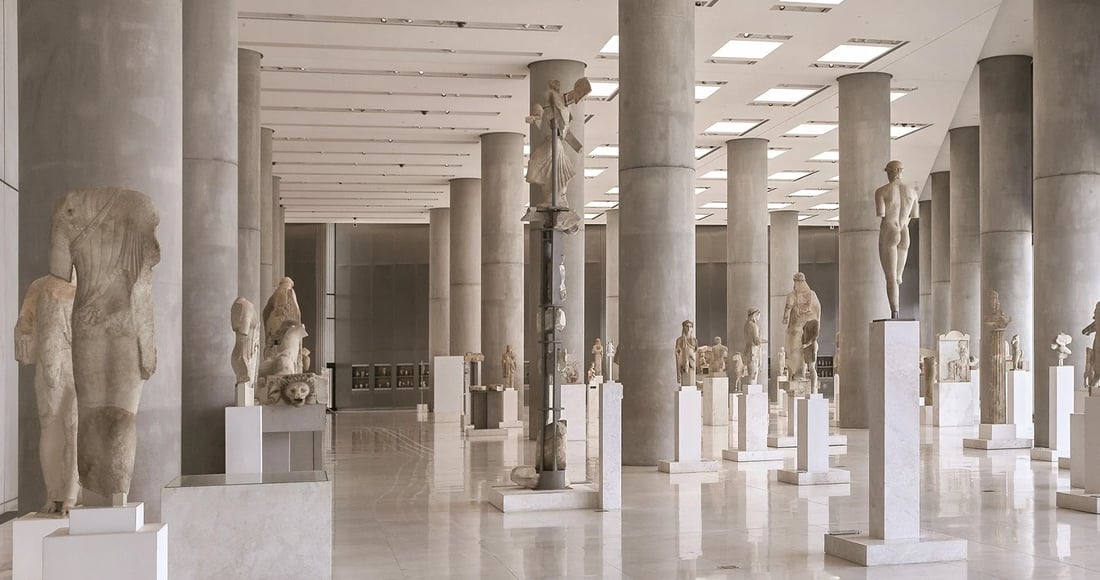
At the foot of the rock stands one of Europe's great modern museums, and it is a separate ticket from the site, a detail that catches out a remarkable number of visitors. The Acropolis Museum holds the things the hill can no longer keep safe: five of the original Caryatids, the surviving Parthenon sculptures in a top-floor gallery aligned with the temple itself and glazed on all sides so you study the frieze with the real Parthenon over your shoulder, and, underfoot, glass floors over the excavated ancient neighbourhood the museum was built above. Skip-the-line museum entry is €25.90, and the guided museum tour (€35.00) earns its keep in the Parthenon Gallery alone.
The sequencing question, museum first or rock first, has a best answer: rock at 8am, museum at midday. You escape the heat exactly when the summit becomes an anvil, and the sculptures make double sense once you have seen where they stood. The second-floor café terrace, with its straight-on Acropolis view, is the right place to admit how well you have planned your day.
Beyond the rock
The Acropolis anchors a whole ancient city. The Ancient Agora, where Socrates argued and democracy did its daily business, is fifteen minutes' walk and a separate entry (from €26.00 with digital guide); the colossal Temple of Olympian Zeus (from €26.00) stands a short stroll east. Both are covered by the Multipass. For free, the Areopagus rock beside the Acropolis exit gives the classic sunset view over the Agora, and Philopappos Hill opposite provides the postcard shot of the Parthenon itself. Below the north slope, the lanes of Plaka and the tiny whitewashed island-village of Anafiotika are where the walk down turns into dinner.

And if the Acropolis lights the fire properly, the finest encore in Attica is an evening run down the coast to Cape Sounion, where the Temple of Poseidon stands on its cliff above the Aegean. The guided sunset tour starts at €19.00 and delivers the single best sunset in the region.
Practical tips that make the difference
Footwear first, because the Acropolis is the rare world monument that is genuinely slippery: centuries of feet have polished the marble walkways to a shine, and trainers or rubber-soled walking shoes are the only sensible choice. High heels have been banned outright since 2009 to protect the marble, and guards do turn people away for them. Bring a full water bottle (fountains cluster near the entrances, not on the summit), a hat and real sunscreen; there is nowhere to hide from the sun once you are up.
Travel light: large backpacks, wheeled luggage, tripods and selfie sticks are not allowed, strollers cannot be taken up, and drones are banned over the site. Visitors with mobility needs should know there is a lift on the north face reaching the summit level near the Erechtheion; it needs to be arranged in advance and does not run in high winds, so build in a fallback. However you go up, give the visit a half day with the museum included, and book the timed slot before you fly rather than after you land. See current availability across everything at Athens on tickadoo.
Frequently asked questions
Do I need to book Acropolis tickets in advance?
In summer, absolutely. Entry runs on timed hourly slots with a daily cap of around 20,000 visitors, and the desirable early-morning and late-afternoon slots sell out first in July and August. Booking a few days ahead secures the slot that suits your plan; entry with audio guide starts at €39.00 on live July 2026 prices.
Is the Acropolis Museum included with the Acropolis ticket?
No. The museum at the foot of the hill is a separate institution with its own ticket, from €25.90. It is emphatically worth it: the original Caryatids and the Parthenon sculptures are there, not on the rock.
What is the best time of day to visit the Acropolis?
The 8am opening, or after 3pm. The 10am to 2pm window combines the biggest crowds with the fiercest sun, and there is no shade on the summit at all. In summer, morning slots also protect you against midday heat closures.
Does the Acropolis close in heatwaves?
It can. On extreme-heat days the site has repeatedly closed during the hottest hours, typically midday to 5pm, in recent summers. If temperatures are forecast above 40 degrees, book the morning slot and check the site status on the day.
How long does the Acropolis take?
Around 90 minutes to two hours on the hill, including the south-slope theatres, plus another 90 minutes or more for the Acropolis Museum. Rock in the morning, museum over midday is the sequence that beats both the crowds and the heat.
Which Acropolis entrance is quicker?
The south-east entrance by the Theatre of Dionysus, two minutes from Acropoli metro station, usually has far shorter queues than the main western gate, and it takes you up through the ancient theatres on the way.
What shoes should I wear at the Acropolis?
Sturdy, rubber-soled shoes. The marble paths are polished slick by centuries of visitors and are treacherous even when dry. High heels have been banned since 2009 and can get you turned away at the gate.
Planning the rest of the city? Start with everything bookable at Athens on tickadoo, work through the must-see historical sites of Athens, go deeper with Athens beyond the Acropolis, or take the same complete-guide treatment to Rome with our guide to visiting the Vatican.

Built by the founders of London Theatre Direct, with 25 years of expertise in theatre ticketing. The tickadoo editorial team covers West End and Broadway shows, attractions, tours and experiences across 700+ cities.
About the team